
One incident, many signals
Video and neighborhood events tied to the same incident node, not scattered across five dashboards.
One incident. One graph. One evidence record, across cameras, sites, and time.
This capability is now part of AI Video Detection, the primary product it powers.
View AI Video DetectionVideo and neighborhood events tied to the same incident node, not scattered across five dashboards.
Related detections within a rolling window are grouped so the same event doesn't produce ten disconnected alerts.
Every incident carries site, building, camera, and org metadata, so downstream tools inherit context automatically.
The graph drives assignment, review, sealing, and delivery, this is where detection becomes evidence work.
Query historical incidents by category, site, time, or confidence, the graph is queryable, not just scrollable.
The graph exports as a claim-ready evidence package for security, risk, claims, and insurance teams.
Inside the product
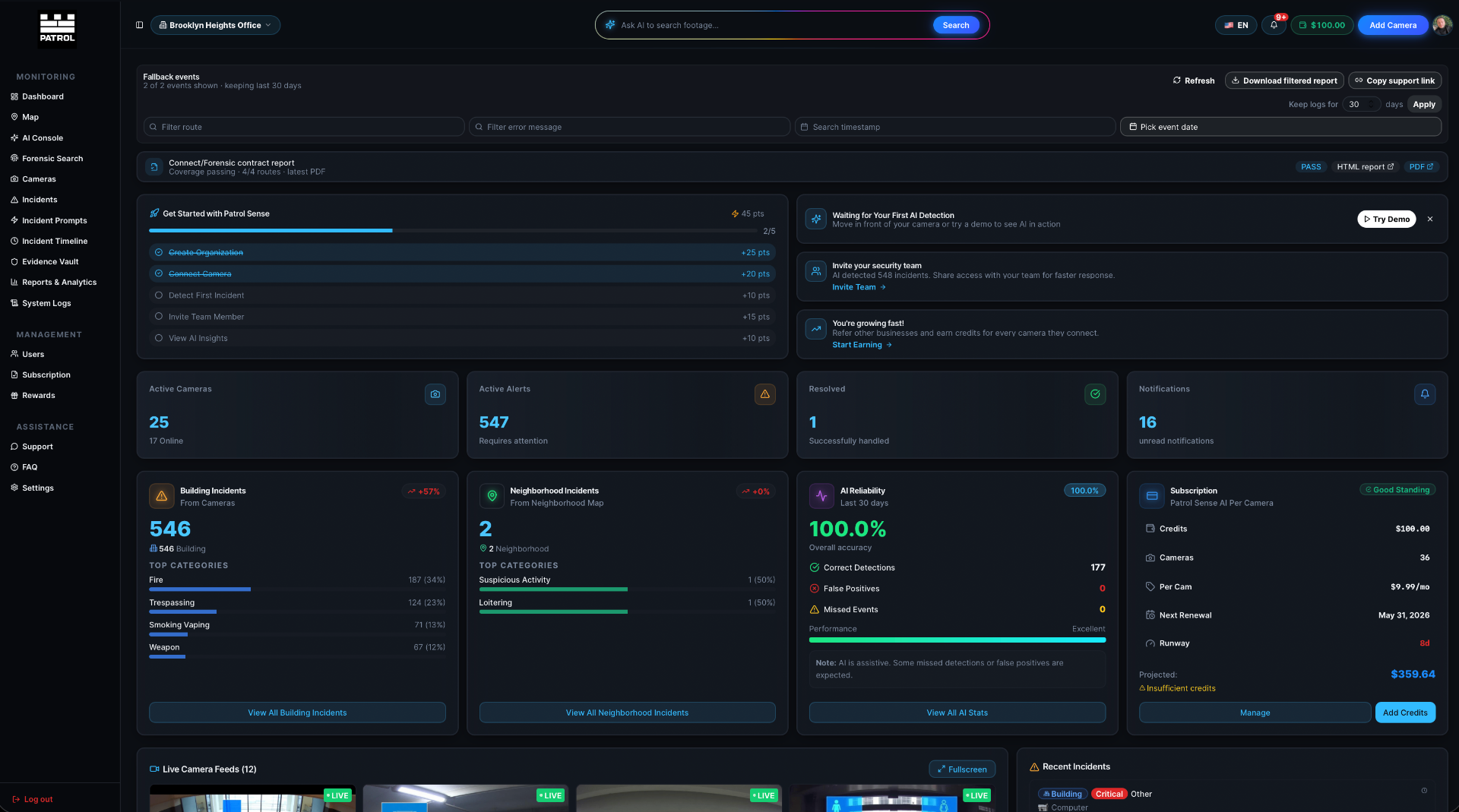 01
Related detections across cameras and sites collapse into a single incident node.
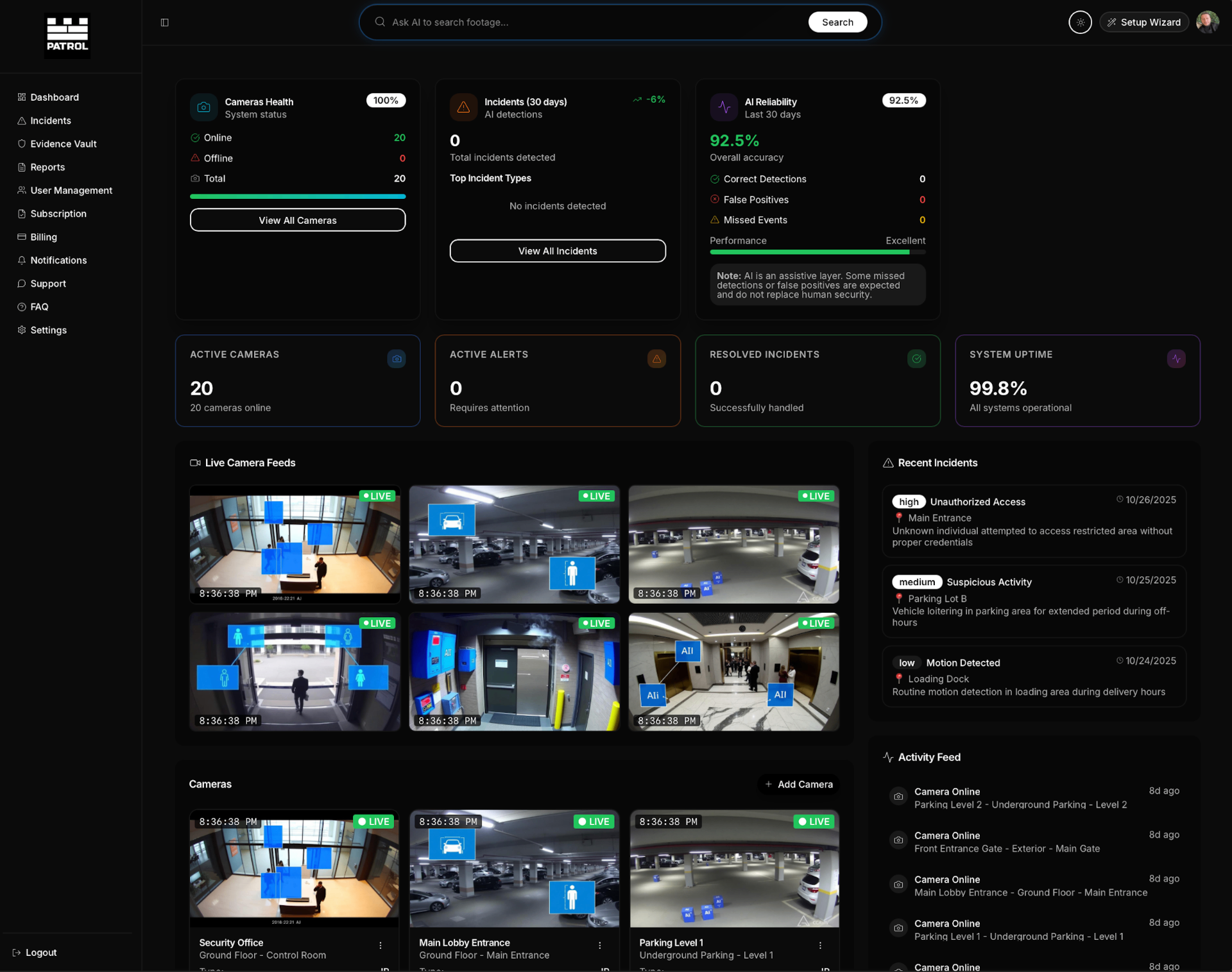 02
The graph drives assignment, review, sealing, and delivery, not just alert display.
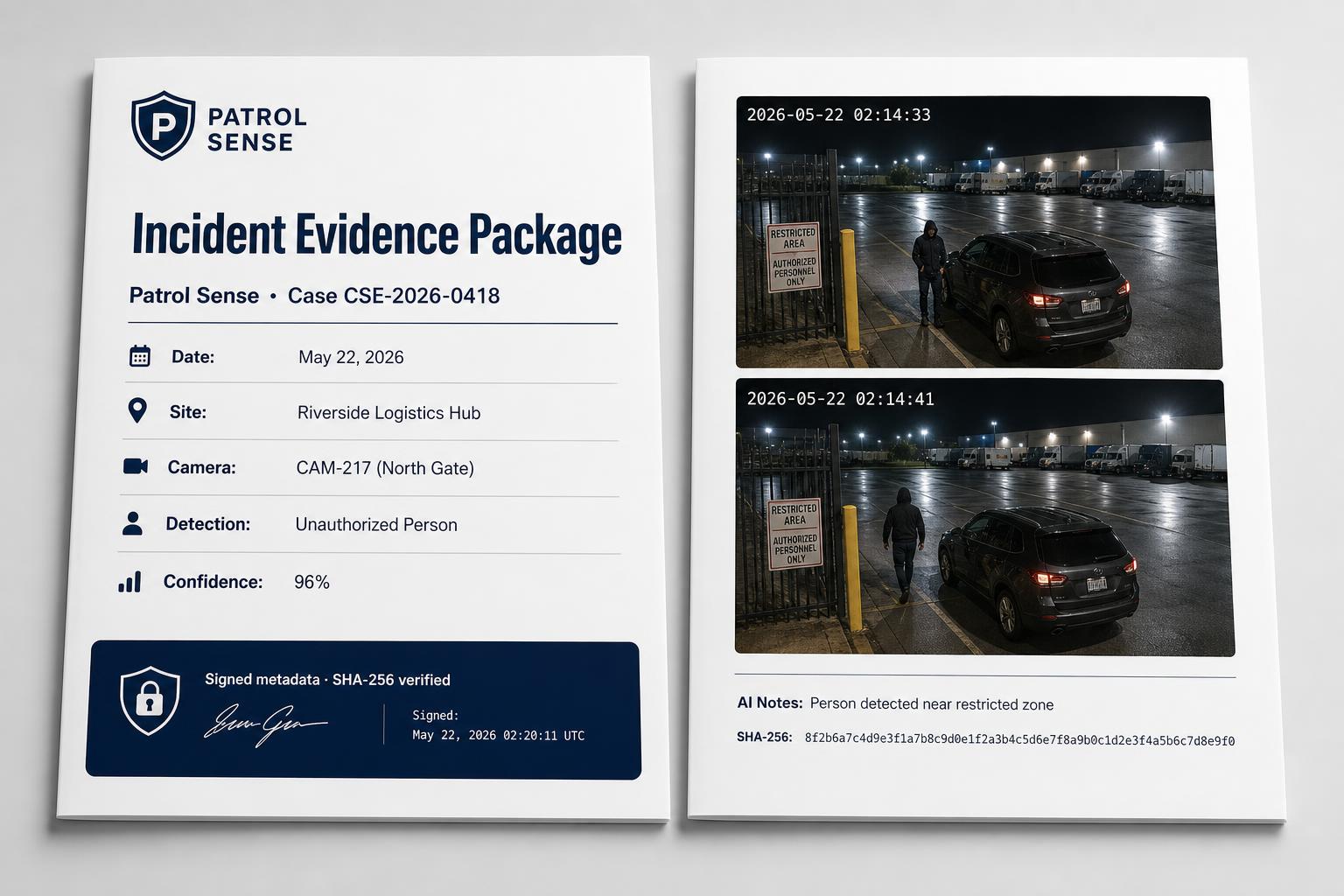 03
Each graph exports as a claim-ready evidence package for risk, claims, and insurance teams.
The incident graph structures operational and evidentiary data. It is not a legal determination of fault, coverage, or liability, and it does not replace investigations conducted by qualified professionals.


