The Operational Burden of Shared Industrial Traffic Zones
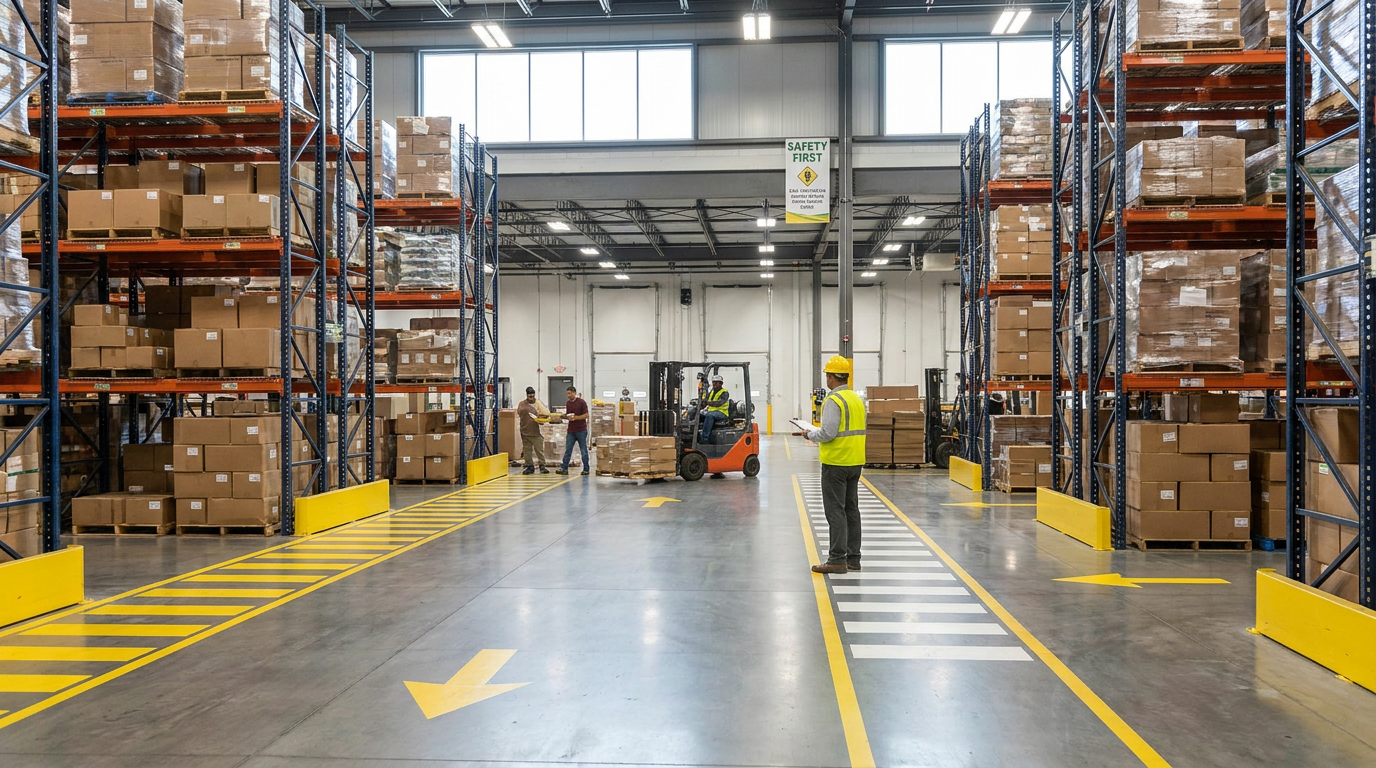
In modern distribution centers and fulfillment hubs, high-velocity material handling equipment must coexist with ground personnel. Forklifts, reach trucks, and autonomous tuggers share tight transit corridors with order pickers, maintenance staff, and inventory counters. Even minor lapses in situational awareness or lane discipline can lead to severe structural impacts, stock loss, or catastrophic worker injuries.
Facility leadership routinely invests in floor striping, physical guardrails, and acoustic warning sirens to minimize risk. Yet, enforcement remains largely reactive because floor supervisors cannot maintain visual supervision across hundreds of thousands of square feet. When near-misses occur, management often learns about them only after an injury report or expensive racking repair request surfaces.
The Inefficiency of Continuous Video for Auditing Compliance
Traditional CCTV installations blanket warehouse floors, but continuous video streams fail to address the core requirements of active floor safety. Security teams do not have the time to scrub through tens of thousands of recorded hours across dozens of cameras simply to verify whether forklift drivers followed designated right-of-way protocols.
Furthermore, transmitting and archiving high-bitrate video footage across sprawling industrial campuses strains enterprise networks and creates massive cloud storage line items. In the aftermath of a near-miss or equipment collision, retrieving relevant footage often turns into an arduous manual hunt through fragmented video files, delaying actionable post-incident corrective measures.
Automated Hazard Verification via Snapshot Feeds
Modern computer vision changes the paradigm by shifting analysis from passive retrospective recording to targeted, rule-based verification. Instead of streaming continuous video feeds, intelligent systems monitor existing camera angles to evaluate spatial relationships between moving equipment and pedestrian zones in real time.
When an infraction occurs—such as a pedestrian entering a high-density racking aisle while a forklift is actively engaged—the system captures high-resolution, contextual snapshots rather than long video clips. These timestamped frames document the precise sequence of events, showing equipment trajectory, personnel position, and available sightlines.
This snapshot approach significantly reduces bandwidth consumption, making real-time monitoring practical even across older industrial facilities with limited network backbones. Safety teams receive clean, definitive documentation within seconds, allowing them to intervene or initiate training before dangerous patterns cause harm.
Assembling Claim-Ready Timelines for Incident Resolution
When an incident does occur, claims adjusters, internal risk managers, and regulatory compliance investigators require clear, immutable documentation. Full video recordings often introduce extraneous, confusing footage that complicates formal evaluations or creates liability ambiguity around unrelated surrounding workers.
Snapshot-based documentation packages present an objective, chronological storyboard that shows the operational environment immediately prior to, during, and after an event. Each frame contains cryptographically verifiable metadata, including exact system timestamps, camera locations, and visual indicators of marked transit boundaries.
These structured visual summaries streamline insurance review workflows and reduce friction with regulatory bodies. By eliminating the subjective interpretation common in vague eyewitness statements, operations leaders protect their organizations against unfounded claims and ensure fair accountability.
Fostering Floor Accountability Without Surveillance Friction
Workforce pushback is a common barrier to safety tech adoption on warehouse floors. Employees frequently push back against invasive, continuous video tracking systems that feel like round-the-clock behavioral surveillance rather than genuine safety measures.
Targeted snapshot detection respects employee dignity by focusing strictly on environmental risk criteria and spatial non-compliance rather than persistent, individual-level monitoring. Cameras remain inert data conduits until an actual perimeter breach or dangerous proximity condition is detected.
This objective boundary enforcement builds operational trust between management, frontline personnel, and labor representatives. Safety committees can review anonymized, event-driven snapshot reports during shift huddles, using actual facility images to coach team members on proper right-of-way practices and zone discipline.
Conclusion
Maintaining high-throughput logistics operations while safeguarding ground personnel requires consistent, automated oversight across every square foot of an industrial facility. Relying on sporadic manual floor walks or post-incident video archaeology is no longer viable for modern enterprises aiming to minimize injury risk and insurance overhead.
Patrol Sense bridges this gap by transforming an organization's existing camera network into an intelligent, snapshot-based safety monitoring engine without requiring proprietary hardware or heavy network reconfigurations. By delivering objective, claim-ready visual evidence the moment spatial hazards emerge, Patrol Sense empowers operations leaders to protect their workforce, streamline claims, and maintain seamless floor compliance.