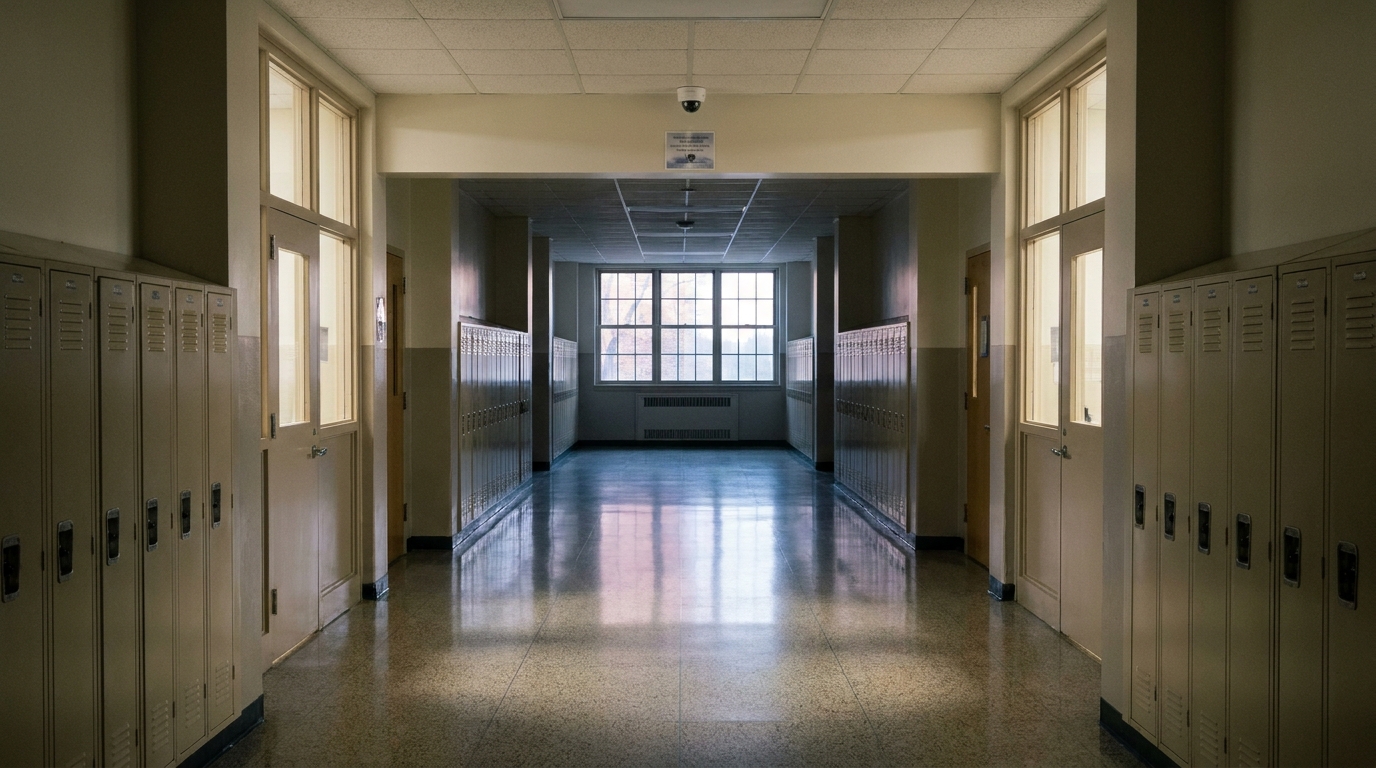
The Short Answer: Hallway Cameras Are Common, Hidden Ones Are Riskier
Public schools commonly operate cameras in hallways and other shared areas, and that part of the question rarely causes difficulty. The harder question is whether a district can conceal cameras so employees do not know they are being recorded. There is no simple yes or no, because the answer depends on where the camera is, whether it records audio, what district policy and employee agreements say, and the law of the jurisdiction.
A legal Q&A discussion of this exact Texas scenario points the same way: general-purpose cameras in open school areas are treated very differently from recording in places where people expect privacy. Districts should treat that as a starting point for a conversation with counsel, not as a green light. Nothing in this article is legal advice, and rules vary by jurisdiction and by the facts of each situation.
For districts searching for guidance on school hallway camera employee monitoring, the practical takeaway is that the decision to hide a camera is a separate decision from the decision to have a camera. It deserves its own review, approval and documentation.
Why Location and Audio Change the Analysis
Hallways, entrances and similar common areas generally carry a lower expectation of privacy than restrooms, locker rooms, changing areas or private offices. Cameras in those sensitive spaces are widely treated as off limits, and a covert placement near them invites serious problems. A district planning any camera should map exactly what each field of view captures.
Audio is a separate issue. Recording sound, particularly conversations, can fall under wiretapping and eavesdropping rules that are distinct from the rules for silent video. Many video systems can record audio by default, so administrators should confirm that audio is disabled unless counsel has specifically approved it.
Student presence matters too. Hallway footage will often show students, and depending on how it is stored and used, it may raise student privacy and records questions, including those under federal education privacy rules. Using the same footage for an employee matter can complicate how it must be handled.
Notice and Policy: What Districts Weigh Before Covert Monitoring
Notice is the central issue in covert monitoring. When employees are told in advance that common areas are recorded, the district can credibly say the cameras serve safety and security. When cameras are hidden specifically to catch employees, the district may face questions about fairness, trust and whether its own policies authorized the practice.
Before considering anything covert, administrators typically review the board policy on surveillance, the employee handbook and any acknowledgment forms staff have signed. If policy is silent or says cameras are posted, a hidden installation may conflict with the district's own stated practices. Updating the policy first, with board involvement where required, is usually cleaner than acting and explaining later.
Records obligations also apply. Public entities are generally subject to public records and retention rules, so footage collected for an employee investigation may later be requested or required in a dispute. HR and the records officer should know in advance how long footage is kept, who can access it and how it is preserved when a matter is open.
Labor and Employment Considerations
Employee relations carry as much weight as the legal analysis. Where employees are covered by contracts, association agreements or consultation arrangements, those documents may address surveillance, discipline procedures or investigation standards. Even where they do not, a discovery of hidden cameras can damage morale and make employees less willing to report concerns.
Evidence gathered covertly can also be contested. An employee facing discipline may challenge how the footage was obtained, whether policy was followed and whether the district applied the same standard to others. Consistent, documented procedures make a disciplinary decision easier to defend than a one-off surveillance effort.
HR should be involved from the start, not brought in after footage exists. Counsel can advise on whether a specific situation, such as a credible allegation involving safety or theft, calls for a different approach, and on how to limit access to a small, defined group.
Safer Alternatives to Hidden Cameras
The most defensible approach is open monitoring supported by clear policy. Cameras are visibly mounted, signage or handbook language explains that common areas are recorded, and the stated purposes are safety, security and incident review. This deters problems, protects staff who are wrongly accused, and avoids the trust cost of concealment.
Equally important is a written incident review procedure. It should say who may request footage, what triggers a review, who approves access, how the relevant moments are preserved and how findings are documented. Limiting review to a specific incident, time window and location is more proportionate than watching staff continuously.
Districts can also address misconduct concerns without cameras at all, through reporting channels, supervisor observation, door and badge records, and clear conduct expectations. These tools often surface the same problems and carry fewer legal and relational risks.
Conclusion
A district's ability to install cameras in hallways is generally well established, but hiding them to monitor employees is a different matter that depends on notice, policy, labor arrangements and local law. Districts are usually better served by posted cameras, clear policy and a disciplined incident review process, reviewed in advance by counsel and HR.
Patrol Sense works with a district's existing cameras to detect incidents in real time and capture snapshot-based evidence tied to specific events, with a multi-site dashboard and camera health monitoring. That event-driven approach supports the kind of defined, documented review described above, without requiring new hardware or continuous footage viewing.
Frequently asked questions
Can a school put cameras in restrooms or locker rooms?
Cameras in restrooms, locker rooms and changing areas are widely treated as off limits because of the high expectation of privacy in those spaces. Districts should not place cameras there, covertly or openly, and should confirm that no camera's field of view reaches into them. Counsel can confirm the rules that apply locally.
Does a school need to tell employees about hallway cameras?
Requirements vary by jurisdiction, but giving notice is a widely recommended practice. Handbook language, signed acknowledgments and posted signs show that monitoring has a stated safety purpose and reduce disputes later.
Is recording audio in school hallways treated the same as video?
No. Audio recording can be subject to separate wiretapping and eavesdropping rules, so it should not be assumed to be covered by the same authority as silent video. Districts should confirm that audio is disabled unless counsel has approved it.
Who should be involved before a district changes its camera policy?
Administrators typically involve legal counsel, HR, the records officer, IT or security staff and, where required, the school board. Each group covers a different risk, from legal compliance to retention and access controls.
How can a district review an incident without watching staff continuously?
A written procedure can limit footage review to a specific incident, time window and location, with defined approvers and documentation. Event-based review is more proportionate than ongoing observation and is easier to defend if the matter is challenged.