Are Hidden Cameras in a Restaurant Legal?
The short answer is that it depends on where the camera points, whether it records sound, and what your jurisdiction requires. If you are asking whether hidden cameras restaurant legal rules allow secret recording, the answer in most places is that video of public-facing and working areas is generally permitted, while covert recording is a much riskier choice than visible, signed cameras. Rules differ by country, state and sometimes city, and this article is general information rather than legal advice.
Owners often want hidden cameras because they worry that visible ones change behavior or can be avoided. In practice, the legal and employment risks of concealment usually outweigh that benefit. A camera that staff and guests can see, backed by clear signage, is easier to defend and still produces useful evidence of what happened at the register, the door or the kitchen pass.
In the United States, owners generally have wide latitude to record video in areas where people have no reasonable expectation of privacy, but some states have specific employee notice requirements and nearly all restrict cameras in private spaces. In Europe, data protection rules typically require a stated purpose, transparency toward the people being recorded and proportionate use, and covert monitoring is usually treated as an exception rather than a routine practice. A local attorney can confirm what applies to your location.
Notice-Based Monitoring Versus Private Areas
A useful way to think about restaurant cameras is to separate two categories. The first is notice-based monitoring of areas where people can reasonably expect to be observed, such as the entrance, dining room, bar, host stand, point-of-sale stations, kitchen line, receiving door and parking lot. The second is private areas, where cameras are generally prohibited regardless of any notice.
Restrooms, changing areas, locker rooms and lactation or break spaces used for personal care fall into the second category. Placing a camera there, hidden or not, creates serious exposure in most jurisdictions and can become a criminal matter rather than only a civil one. If a business has a genuine security concern near these spaces, the compliant approach is to cover the hallway or approach rather than the room itself.
Gray areas exist, such as staff break rooms, offices and cash-counting rooms. Whether monitoring is acceptable there often depends on the purpose, how visible the cameras are and what staff were told. When in doubt, document the business reason, limit the field of view and get legal guidance before installing.
Audio Recording Is a Separate Question
Many restaurant owners focus on video and overlook sound. Recording conversations is commonly regulated more strictly than recording images, and some jurisdictions require the consent of one or all parties to a conversation. A camera with a built-in microphone can therefore create legal exposure even where the video itself is fine.
The safest general approach is to disable audio on security cameras unless counsel has confirmed it is allowed and a clear notice is in place. Check the settings on each device rather than assuming the default is off, since some models record sound unless it is turned off. Record the audio setting for every camera in your placement documentation so you can show what the system was configured to capture.
Why a Staff Notice Policy Matters
Even where covert video of a work area may be technically allowed, a written notice policy protects the business in several ways. Some US states require employers to give notice of electronic monitoring, and European data protection rules generally expect employees to be informed about surveillance and its purposes. Whether or not notice is mandatory where you operate, it also reduces disputes about whether staff had any expectation of privacy.
A practical policy is short and specific. It states that cameras operate in listed areas, explains the purpose such as safety, theft prevention and incident review, says that restrooms and changing areas are never monitored, and identifies who can view images and how long they are kept. Have new hires acknowledge the policy in writing and re-issue it whenever cameras are added or moved.
Notice for customers works the same way. Visible signs at the entrance and near monitored areas tell guests that cameras are in use, and they cost far less than the reputational and legal fallout of a secret system being discovered. Signage requirements vary, so confirm the wording and placement rules locally.
How to Document Camera Placement for Incident Evidence
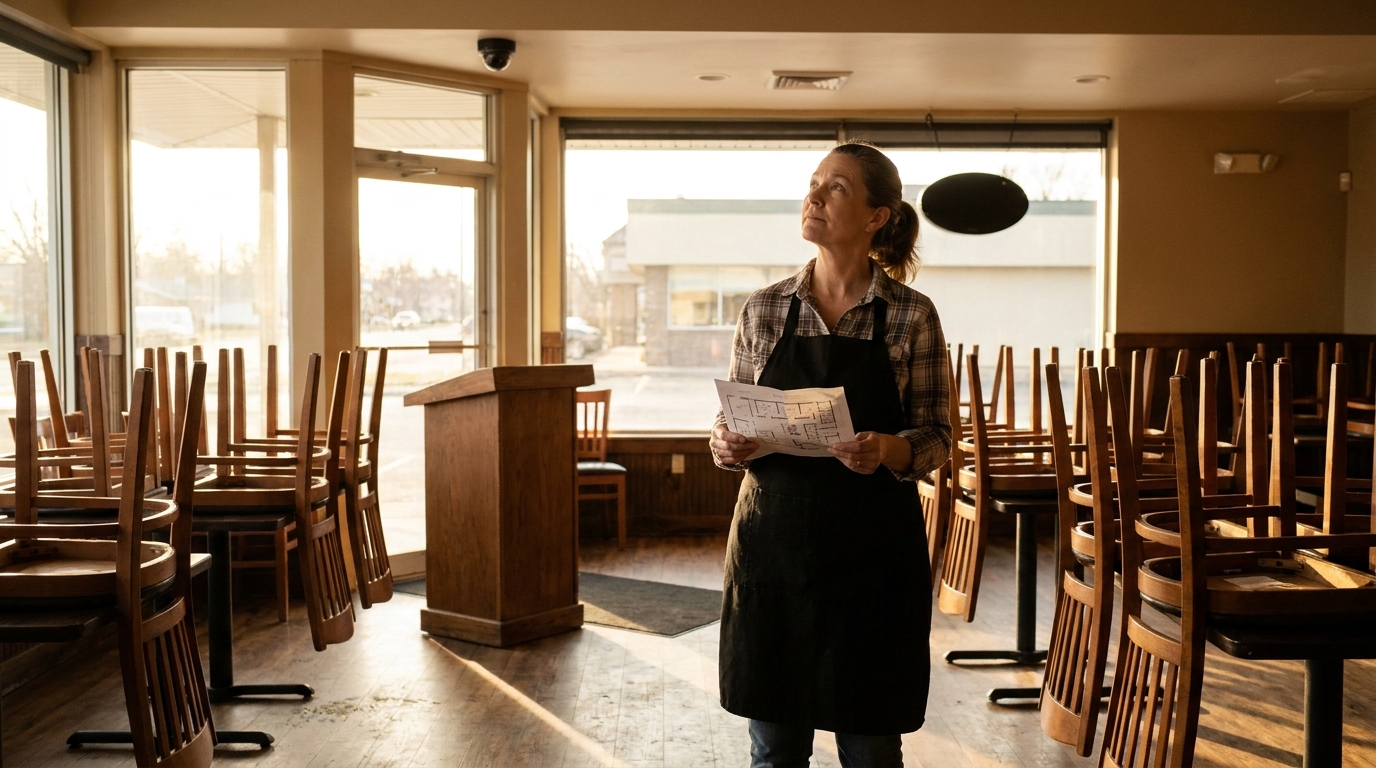
If a slip and fall, a cash discrepancy, a workplace injury or a dispute with a guest leads to a claim, the first question is often what the camera could actually see. A simple placement record answers it. Keep a floor plan marking each camera location, and for each camera note its identifier, installation date, area covered, whether audio is enabled and the business purpose of that view.
Add photographs of each camera and of the signage, with dates, and keep a change log showing when a camera was moved, replaced, taken offline or had its angle adjusted. This helps explain gaps in coverage and shows that private areas were deliberately excluded. Pair it with your written notice policy and the staff acknowledgments so the whole picture is available in one place.
Evidence handling matters as well. Decide in advance who may access images, how incident images are saved when something happens and how long routine material is retained, and apply those rules consistently. A documented, consistent process is easier to defend than one built after a claim arrives.
Conclusion
For most restaurants, the sound approach is visible cameras, clear signage, a written staff notice policy, no cameras in private areas and no audio unless counsel approves it. Hidden systems add legal and employee-relations risk without improving the quality of evidence, and local rules should always be confirmed with a qualified attorney.
Patrol Sense works with the cameras a restaurant already has, using AI detection and real-time alerts to flag incidents and preserve snapshot-based evidence rather than video clips. Combined with a current placement record and a clear notice policy, that gives owners and managers organized documentation when an incident needs to be reviewed.
Frequently asked questions
Can a restaurant put cameras in the restroom?
Generally no. Restrooms and changing areas are private spaces where cameras are prohibited in most jurisdictions, and a notice sign does not make them acceptable. Cover the corridor or entrance instead and confirm local rules with an attorney.
Do I have to tell employees about security cameras?
Requirements vary by location. Some US states and many European data protection regimes expect employees to be told about monitoring, and giving written notice is good practice even where it is not strictly required.
Is it legal to record audio with restaurant security cameras?
Audio is often regulated more strictly than video, and some jurisdictions require consent from one or all parties to a conversation. Most restaurants are safer turning audio off unless counsel has approved recording it.
Do I need signs saying cameras are in use?
Signage is not required everywhere, but it is widely recommended and is required in some jurisdictions, particularly under European data protection rules. Visible signs also support the argument that guests and staff were informed.
What should I keep to prove where my cameras were placed?
Keep a dated floor plan, a per-camera record of location, coverage area and audio setting, photos of cameras and signs, and a change log for moves or outages. Store it with your staff notice policy and acknowledgments so it is available if a claim arises.