The Strategic Challenge of Parking Lot Security Staffing
Parking lots are dynamic environments that present unique security challenges, from minor fender benders to more serious incidents like theft or vandalism. Effectively securing these spaces requires a diligent and well-distributed security presence.
However, traditional staffing models often rely on fixed patrols or static guard posts, which may not align with fluctuating risk patterns or real-time needs. This can lead to inefficient resource allocation, leaving some areas over-staffed while others remain vulnerable at critical times.
Optimizing security personnel deployment is not just about presence, but about strategic placement to manage risks efficiently. This demands insights into incident frequency, location, and timing.
Limitations of Traditional Staffing Approaches
Conventional parking lot security staffing often operates on predetermined schedules or general assumptions about high-risk zones. These methods are inherently reactive and lack the agility to adapt to evolving threats or irregular activity peaks.
Without real-time data, security teams may be over-deployed in low-risk areas or under-deployed where incidents are most likely to occur. This leads to increased operational costs without a proportional increase in security effectiveness.
Furthermore, extensive manual patrols can be physically demanding and lead to fatigue, potentially reducing vigilance. A more intelligent approach is needed to support and direct human efforts where they are most impactful.
Leveraging AI for Data-Driven Staff Deployment
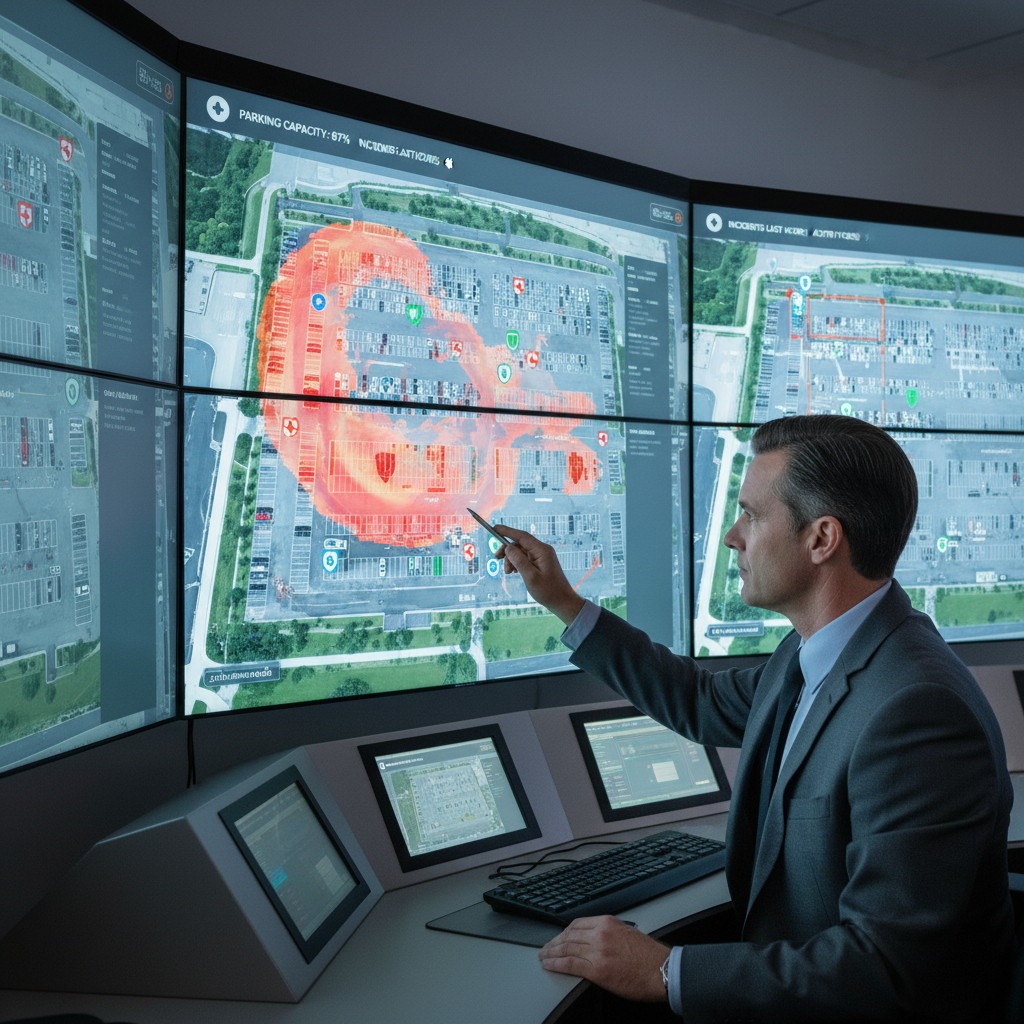
AI video analytics transforms existing camera infrastructure into intelligent sensors, providing objective data on activity patterns, anomalies, and incident occurrences within parking lots. This data is crucial for informinng staffing decisions.
By analyzing historical and real-time incident data, AI systems can identify high-risk areas, peak incident times, and even predict potential hotspots. These insights enable security managers to deploy staff proactively, rather than reactively.
For example, if AI detects a consistent pattern of unauthorized vehicle entry attempts between 2 AM and 4 AM in a specific zone, security personnel can be strategically assigned to patrol that area during those hours, deterring incidents before they escalate.
Enhancing Incident Response and Operational Efficiency
Intelligent staff deployment directly correlates with improved incident response times. When security personnel are positioned optimally based on AI-generated insights, they can respond to detected incidents more swiftly and effectively.
This optimized deployment also contributes to significant operational efficiencies. By reducing unnecessary patrols in low-risk areas, businesses can reallocate staff to other critical security functions or reduce overall staffing costs without compromising safety.
The ability to justify staffing decisions with objective data also supports budget proposals and demonstrates a commitment to evidence-based security management.
Proactive Risk Mitigation Through Optimized Presence
AI-informed staffing allows security teams to move beyond mere response to active risk mitigation. A visible, strategically placed security presence acts as a powerful deterrent, reducing the likelihood of incidents occurring in the first place.
By understanding where and when security needs are greatest, organizations can create a security footprint that maximizes impact. This means fewer successful incidents and a safer environment for customers, employees, and assets.
The continuous feedback loop from AI analytics allows for ongoing refinement of deployment strategies, adapting to new risks or changing patterns of activity to maintain optimal security coverage.
Conclusion
The strategic deployment of security personnel in parking lots is fundamental to effective protection and risk management. Relying on AI analytics, organizations can move beyond traditional, often inefficient, staffing models to a data-driven approach that optimizes resource allocation.
This enhances incident response capabilities, improves operational efficiency, and fosters a more proactive security posture. Implementing such solutions allows businesses to leverage their existing cameras for enhanced intelligence.
Patrol Sense empowers security teams to make informed decisions about staff deployment by transforming existing cameras into intelligent real-time incident detection systems, providing snapshot-based evidence without requiring new hardware.