The Operational Reality of Municipal Transit Infrastructure
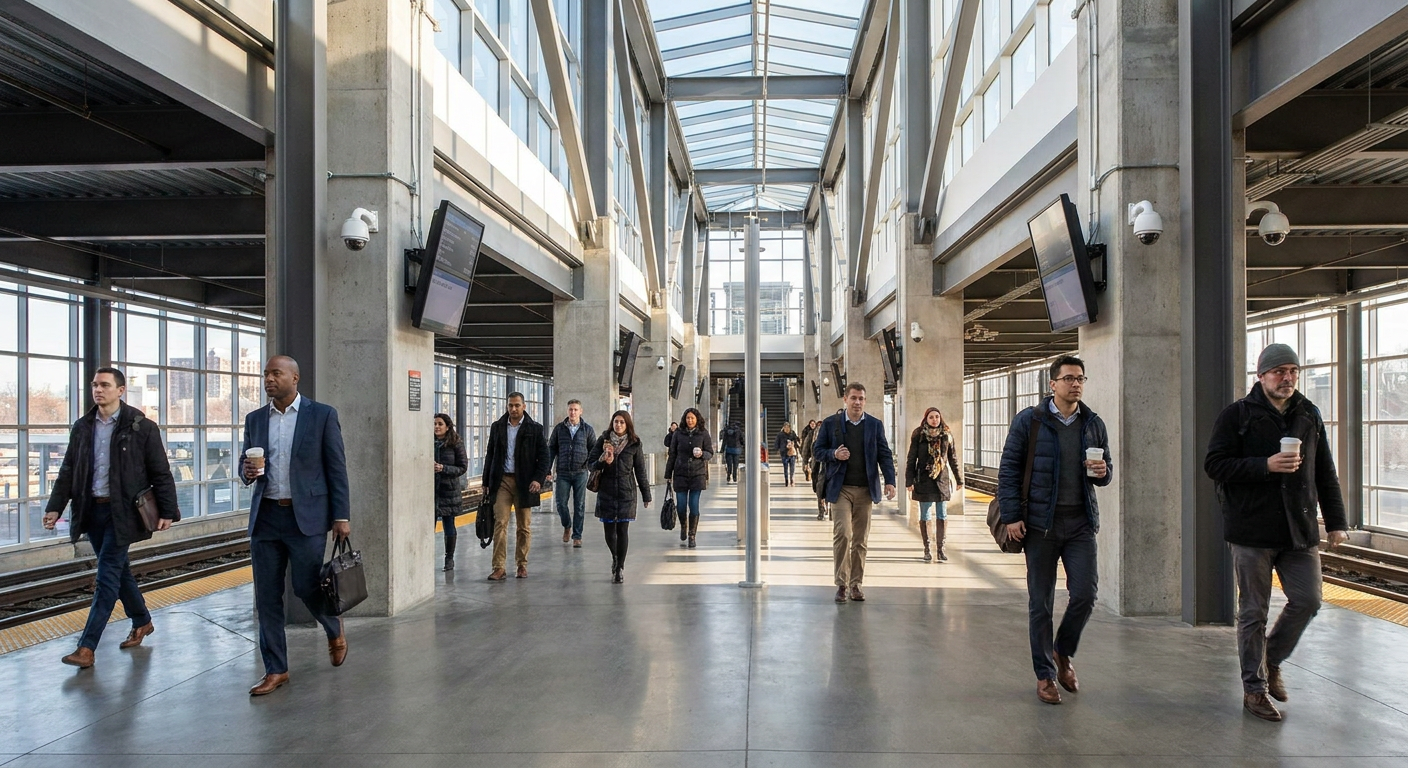
Municipal transit networks are among the most complex public environments to monitor and protect. Stations, platforms, and pedestrian mezzanines experience high-volume pedestrian turnover, sudden shifts in crowd density, and distinct environmental hazards throughout operating hours. At the same time, regional transit authorities must oversee dozens or hundreds of remote facilities simultaneously.
Traditional centralized operations struggle under these conditions. Transit security centers rely on hundreds of passive video streams routed into wall-mounted monitors, expecting operators to manually spot medical emergencies, access violations, or perimeter breaches. In practice, visual fatigue sets in rapidly, leaving security personnel reacting long after an incident has escalated into a major service disruption or liability event.
Automating Real-Time Triage Across Distributed Networks
Effective public safety operations depend on shrinking the interval between an occurrence and verified response. Automated visual anomaly detection transforms station monitoring from a passive recording exercise into an active triage mechanism. Rather than requiring personnel to scan continuous feeds, computer vision algorithms monitor camera viewports in real time to flag critical operational triggers.
These automated alerts can detect perimeter intrusions along maintenance corridors, unauthorized individuals on active track beds, slips and falls on passenger stairwells, or structural obstructions near turnstile gates. Because alerts surface immediately to front-line station agents and dispatchers, teams can intervene before minor issues cascade into system-wide transit delays or severe injury.
Balancing Public Safety with Passenger Privacy Mandates
Public trust in civic infrastructure relies heavily on privacy compliance. Municipal transit agencies must operate under stringent local and federal data privacy standards, which frequently limit continuous video collection, biometric tracking, and prolonged footage archival. The introduction of advanced monitoring systems often prompts reasonable scrutiny regarding commuter surveillance.
Architecture that relies on snapshot-based verification directly resolves this tension. By analyzing video locally and transmitting only lightweight, targeted photographic snapshots when an actionable anomaly occurs, agencies avoid capturing or archiving continuous surveillance reels. This snapshot-only approach strips out extraneous personal data while providing field teams with the exact visual context necessary to confirm an alert.
Accelerating Multi-Agency Coordination and Claim Substantiation
When emergencies take place in transit hubs, response protocols usually demand coordination across multiple public agencies, including municipal police, transit authority dispatch, emergency medical technicians, and facility maintenance teams. Coordinating these disparate teams using verbal radio dispatches alone invites confusion and delayed assessments.
Timestamped visual snapshots create an objective, instantaneous common operating picture. Responders receive an authenticated visual record of the scene before arriving, allowing them to prepare appropriate medical or tactical interventions. Furthermore, when riders file municipal liability claims involving alleged slips, falls, or boarding gate disputes, authenticated snapshot timelines provide clear, unassailable evidence that protects public agencies from fraudulent payouts.
Unlocking Public Capital via Existing Visual Infrastructure
Upgrading public infrastructure traditionally requires massive capital expenditures, disruptive physical construction, and extended vendor lock-in. Transit agencies with fixed municipal budgets cannot justify replacing functional legacy camera hardware simply to access modern analytical capabilities. Solutions must be retrofittable and platform-agnostic to deliver immediate value.
Software-driven visual intelligence enables transit authorities to harness their existing IP cameras without deploying proprietary hardware at every concourse. Processing visual data across existing streams preserves taxpayer capital while rapidly bringing older station facilities into alignment with contemporary municipal safety benchmarks.
Conclusion
Public transit hubs are the arteries of urban mobility, and maintaining commuter confidence requires responsive, transparent, and resilient safety systems. Modern visual incident detection bridges the gap between limited staffing and expansive physical footprints, empowering transit teams to address emergencies within seconds rather than hours.
Patrol Sense empowers municipal authorities to modernize transit security without replacing installed infrastructure. By turning customers' existing cameras into an intelligent incident detection network that delivers snapshot-based, claim-ready evidence without recording video clips, Patrol Sense helps transit operators enhance public safety while protecting passenger privacy and municipal budgets.