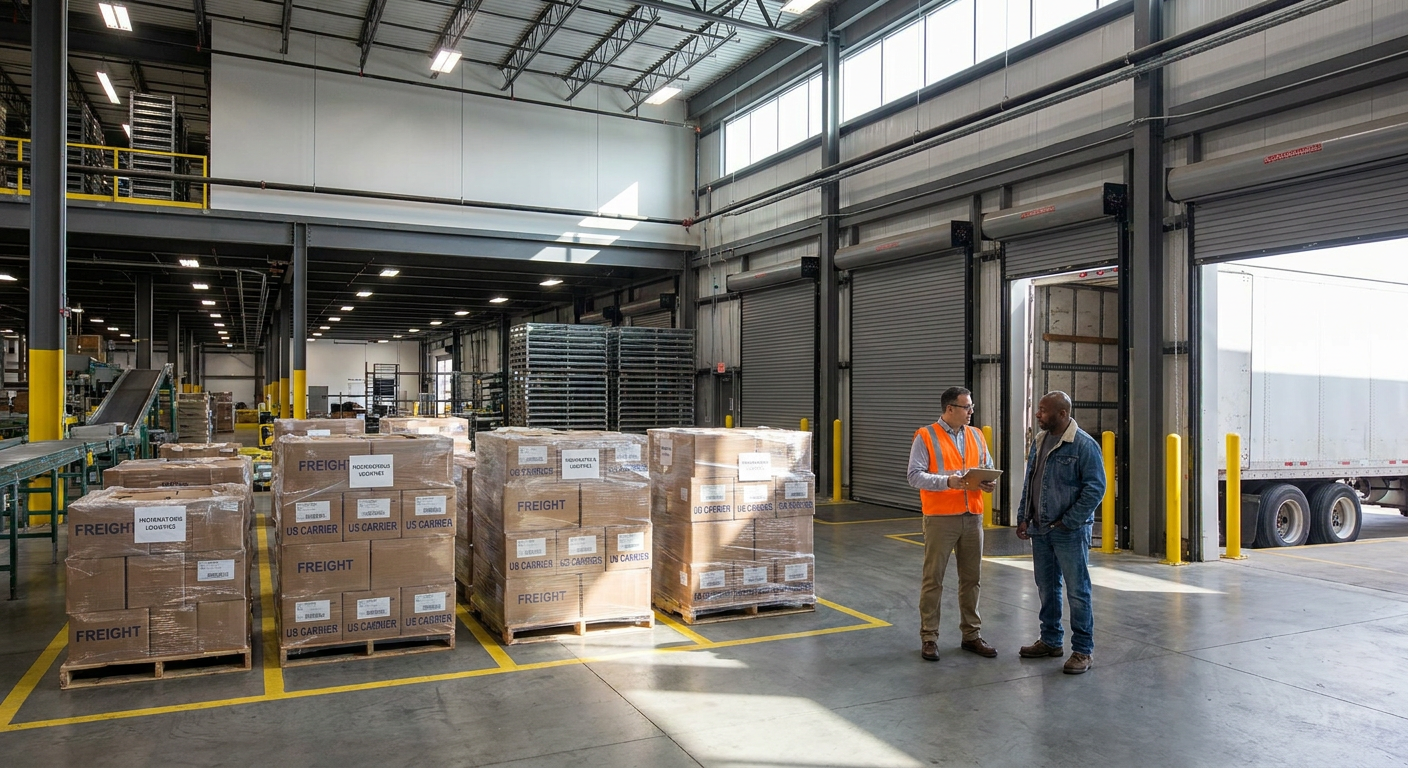
The High Stakes of Loading Dock Liability and Cargo Disputes
Loading docks represent the primary operational interface between industrial facilities, third-party freight carriers, and contract personnel. Because custody transfers happen rapidly across dozens of bay doors, this high-velocity threshold accounts for a disproportionate share of commercial property damage, trailer detention disputes, and freight discrepancy claims. When equipment or goods sustain damage during backing, loading, or staging, responsibility often defaults to whoever possesses the clearest, most immediate visual record.
Traditional dispute resolution frequently fails because operational teams are forced to reconstruct events days or weeks after a bill of lading is signed. When an insurance carrier or logistics partner challenges an invoice for a damaged dock leveler, bent track, or crushed pallet, facility managers typically face hours of manual inquiry. Without structured, verifiable proof at the exact moment of transfer, organizations routinely absorb deductibles or payouts to protect partner relationships.
Why Video Playback Fails the Claim-Ready Standard
Most logistics hubs already possess comprehensive camera coverage across interior staging floors and exterior aprons. However, having continuous video recordings is fundamentally different from possessing claim-ready evidence. Continuous video archives require safety coordinators and risk adjusters to scrub through hundreds of hours of raw footage across multiple camera feeds simply to establish the timeline of an incident.
Furthermore, large video files create severe friction during claims processing. Insurance adjusters, claims administrators, and external legal teams often cannot receive or securely store multi-gigabyte video clips due to strict enterprise IT firewalls and data governance policies. The friction of exporting, redacting, and transmitting massive files frequently stalls claims workflows, extending cycle times and increasing loss adjustment expenses.
The Power of Snapshot-Based Incident Documentation
A structured snapshot model resolves the logistical hurdles of continuous video by isolating critical moments into definitive, forensic-grade still frames. Rather than transmitting unwieldy continuous files, an automated visual pipeline captures high-resolution timestamps, environmental conditions, and precise visual states before, during, and immediately after an occurrence. Each snapshot preserves clear contextual markers, such as equipment positioning, seal integrity, and physical clearances.
Because still imagery carries a dramatically smaller data footprint, these visual records integrate directly into carrier claims packets, bill-of-lading disputes, and incident reports. Claims specialists can review and verify facts in seconds rather than spending hours cross-referencing timestamps across disjointed camera angles. This precision accelerates third-party acceptance and removes ambiguity from indemnity clauses.
Securing Evidentiary Integrity Across Existing Camera Networks
Upgrading an industrial operation's claim posture does not require decommissioning existing security hardware. Industrial facilities often maintain mature RTSP-compatible network cameras that already capture perimeter yards, apron lanes, and interior staging areas. The objective is to elevate these standard streams from passive surveillance into real-time operational witnesses.
By applying intelligent edge analysis to existing video feeds, platforms can automatically flag perimeter anomalies, bay door impacts, and blocked staging zones as they unfold. Generating cryptographic hashes and automated chain-of-custody metadata alongside each snapshot ensures that the captured records withstand rigorous legal scrutiny and forensic audit standards. Adjusters receive clear, unassailable documentation without the facility having to install proprietary, cost-prohibitive cameras.
Reducing Subrogation Timelines and Premiums
In commercial logistics, the speed of documentation directly dictates subrogation outcomes. When a facility can present an organized incident timeline within hours of a dock accident, third-party commercial auto carriers are significantly more likely to accept primary liability. Prompt, documented evidence prevents protracted cross-claims and reduces legal retention fees.
Over time, maintaining an objective, snapshot-backed incident repository shifts commercial risk profiles. Underwriters evaluating commercial property and inland marine policies reward organizations that demonstrate structured risk containment. Presenting auditable, standardized documentation across every dock door minimizes claim reserves, establishes transparent operational accountability, and ultimately lowers annual premium burdens.
Conclusion
Protecting industrial facilities from carrier disputes and unassigned dock damage requires shifting from reactive footage review to proactive, structured documentation. By capturing high-fidelity visual snapshots at the critical moment of risk, facility leaders protect their operational margins and streamline claims processing without adding administrative burden.
Patrol Sense enables logistics operators and enterprise facility managers to transform existing camera infrastructure into automated incident detection and claim-ready verification. By generating discrete, tamper-evident snapshots instead of cumbersome video files, Patrol Sense provides the fast, dependable proof teams need to resolve disputes efficiently and protect the bottom line.