Start With What You Need to Protect and When
The most practical answer to jobsite material monitoring on a small budget is to narrow the problem before buying anything. Identify which materials are most costly or easiest to remove, such as copper, power tools, appliances, framing packages and fixtures, and note where they are kept. Then decide which hours carry the most risk, which on most small sites means nights, weekends and the gaps between a delivery and installation.
A small contractor usually cannot watch an entire site continuously, and does not need to. Monitoring a laydown area, a gate, a storage container and a delivery drop zone covers most of the exposure at a fraction of the cost of full coverage. Writing these priority zones down gives you a simple plan that a supervisor, a subcontractor or an insurer can follow.
Document a Material Inventory Before Anything Goes Missing
Cameras can show that something left the site, but they cannot tell you what was there unless you have a record. A basic inventory kept in a shared spreadsheet, a notebook or a project app is enough, provided it is updated consistently. Record the delivery date, supplier, item, quantity and storage location, and note who received the delivery.
Add a quick count at set points, such as at the end of the day for high-value items and weekly for bulk goods. Take dated photos of staged materials when they arrive and when they are moved. These records make a loss easier to quantify, help separate theft from over-ordering or waste, and give your insurer a clear basis for a claim.
Get More From Cameras You Already Have
Many small contractors already own cameras they underuse, including a camera at the shop or yard, a trailer system, an older DVR kit or a few inexpensive weatherproof units. Before buying new equipment, check whether these can be repositioned to cover the storage area and the entry point. A camera aimed at the place where materials are kept is usually more valuable than one aimed at the general work area.
Placement matters more than camera quality. Mount cameras high enough to be out of easy reach, angle them to avoid direct glare from sunrise or sunset, and make sure the view includes the gate or access path as well as the materials. Check that the connection is stable and that the system is actually recording or sending images, because a camera that quietly went offline is a common reason evidence is missing when it is needed.
Use Motion Triggers to Watch Only the Hours That Matter
Motion triggers let you ignore the working day and pay attention when nobody should be on site. Most camera systems allow you to define zones and schedules, so you can set detection to be active only after crews leave. Restricting detection to the storage area and gate, rather than the whole frame, reduces alerts from passing traffic and neighboring property.
Expect some tuning. Wind moving tarps, rain, insects at night and changes in light can create false alerts, and a flood of them leads people to ignore notifications altogether. Adjust sensitivity and zone boundaries over the first week or two, and keep notes on what you changed. Simple motion detection reports that something moved, whereas AI-based detection can help distinguish a person or vehicle from background movement, which matters more as the number of sites grows.
Add Low-Cost Physical Controls That Support the Cameras
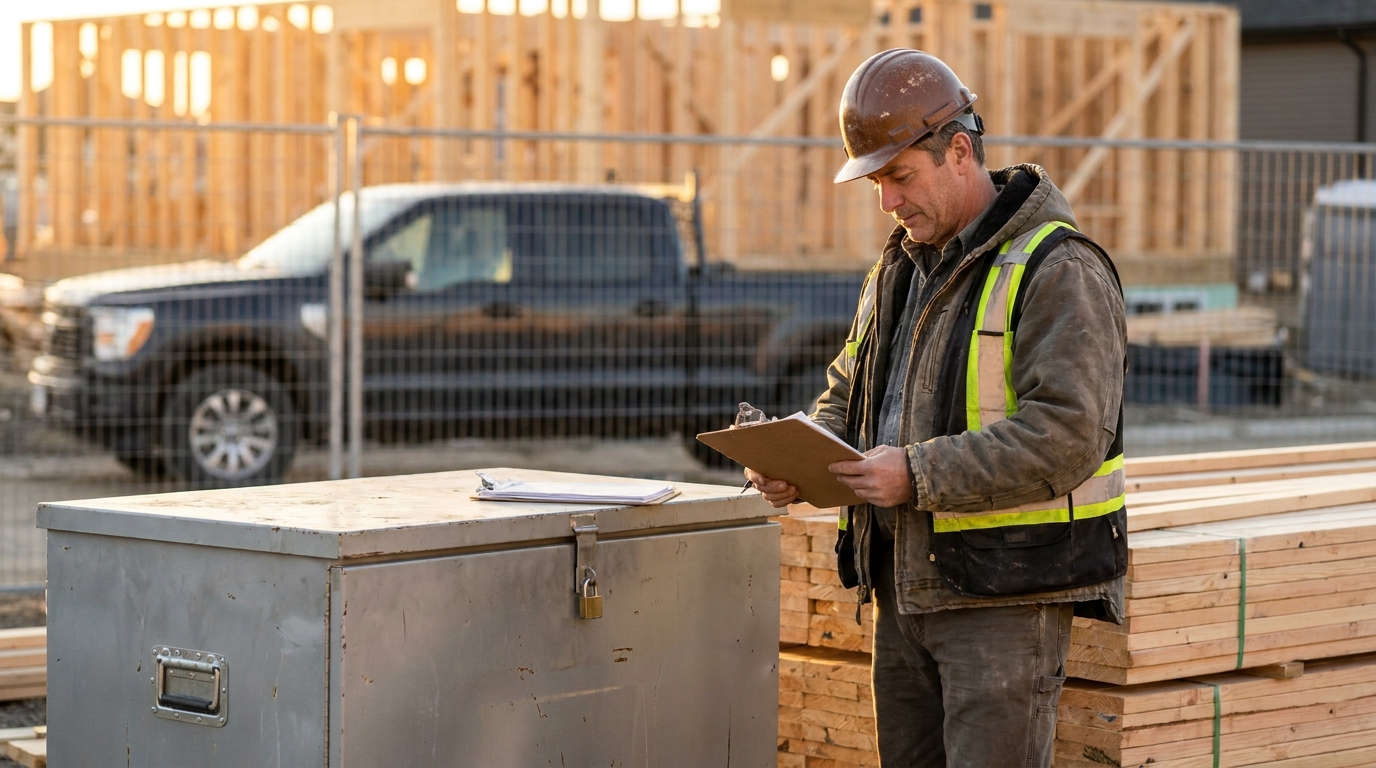
Monitoring is more effective when it is paired with basic physical measures. Good lighting over the storage area improves image quality at night and makes the site less attractive to opportunistic thieves. Lockable job boxes, a locked container for tools and fixtures, and staging materials away from the road reduce what is easy to take in the first place.
Visible signs that the site is monitored can also help, as long as the cameras are real and working. Schedule deliveries so that materials are installed or secured quickly rather than left out over a weekend. If you use subcontractors, tell them which areas are covered and who to contact if they notice something unusual, so that observations reach you the same day.
Keep a Simple Record When Something Does Go Missing
When a loss happens, speed and organization matter. Note the time you discovered it, compare the inventory to what is on site, and save the relevant camera images with their timestamps. Snapshot images that show a person, vehicle or open gate at a specific time are usually easier to share and review than hours of footage, and they can be attached directly to an incident note.
Contact your insurer to understand the notice requirements and any deductible before assuming a claim is worthwhile, since small losses sometimes fall below the deductible. A police report is commonly required for theft claims, though requirements vary by policy and location. Rules on recording, signage and the use of audio also vary by jurisdiction, so check local requirements, especially if cameras could capture neighboring property or public areas. This article is general information and not legal advice.
Conclusion
Effective jobsite material monitoring for a small contractor comes down to a few disciplined habits: know what you have, point the cameras you own at where it is kept, limit alerts to the hours that matter, and keep records you can hand to an insurer. Each step is inexpensive on its own, and together they cover most of the practical risk.
For contractors who want detection that goes beyond basic motion alerts, Patrol Sense applies AI detection to existing cameras and sends real-time alerts with snapshot evidence, with a multi-site dashboard and camera health monitoring to show when a camera has gone offline. AI Video Detection is priced at $19.99 + tax (Standard) or $39.99 + tax (Pro) per camera per month, with no proprietary hardware required.
Frequently asked questions
What is the cheapest way to monitor materials on a jobsite?
The lowest-cost approach is a written inventory with dated delivery photos, combined with locked storage and good lighting. If you already own cameras, aim them at the storage area and gate and enable motion alerts for after-hours. These steps add little cost and create useful records.
Do I need new cameras to monitor a construction site?
Not necessarily. Cameras you already own can often be repositioned to cover storage areas and entry points, provided they have a stable connection and view. Replace or add equipment only where coverage gaps remain after you have optimized placement.
How do I reduce false motion alerts at night?
Limit detection to specific zones such as the gate and laydown area, and schedule it for hours when the site is empty. Adjust sensitivity to account for wind, rain and changing light, and secure loose tarps that move in the breeze. AI-based detection can also help separate people and vehicles from background movement.
What records help most if materials are stolen?
A dated inventory, delivery receipts, photos of staged materials and timestamped camera images are the most useful. Together they show what was on site, when it was last seen and when it disappeared. Your insurer can tell you what documentation it requires for a claim.
Is it legal to record a jobsite with cameras?
Rules vary by jurisdiction, and they can differ for video, audio, signage and cameras that capture neighboring or public property. Check local requirements before installing cameras, and consult a qualified professional if you are unsure. This is general information, not legal advice.