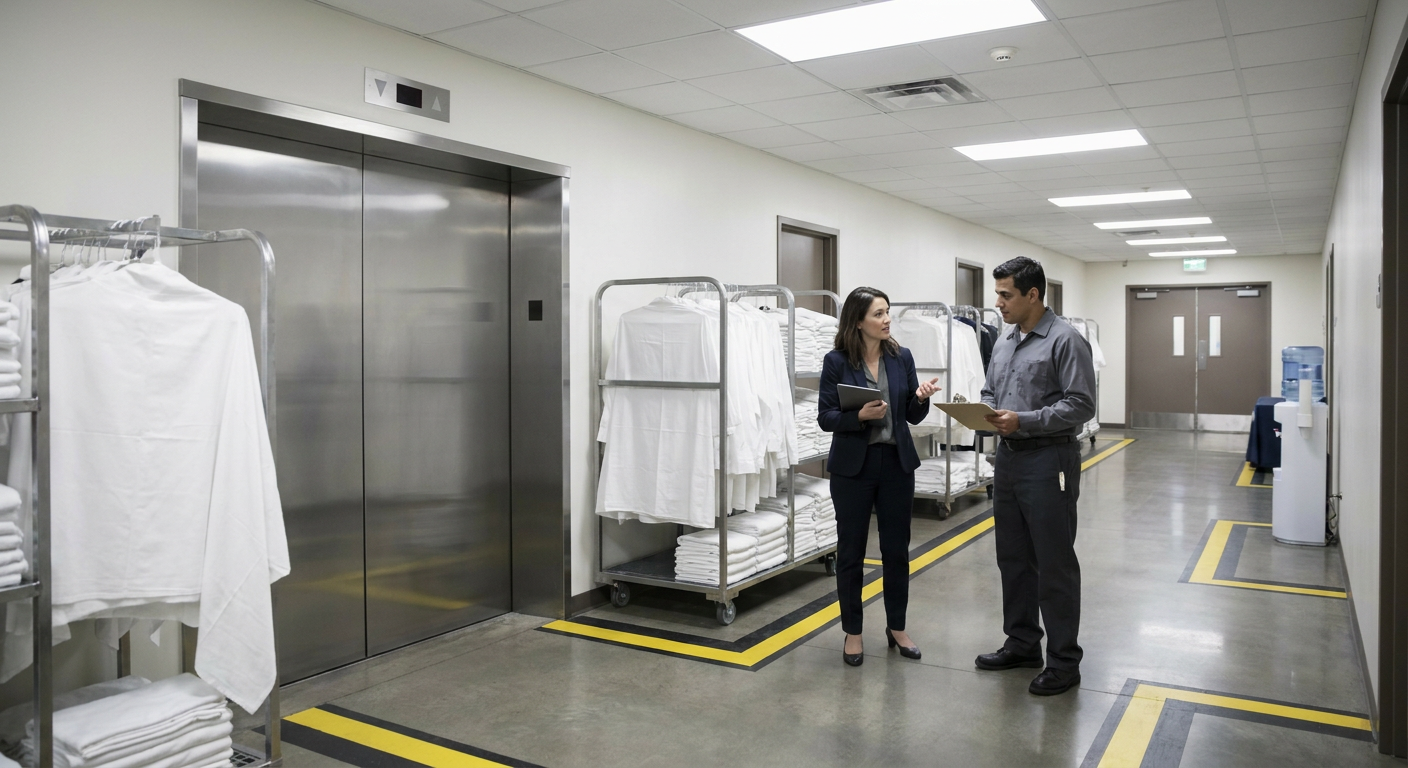
The Hidden Exposure in Hospitality Service Zones
While public lobbies and guest floors receive the majority of aesthetic and operational attention, hospitality liability claims concentrate disproportionately in back-of-house corridors. Service hallways, banquet prep kitchens, linen storage rooms, and loading bays experience continuous foot traffic, heavy equipment transport, and frequent liquid spills. When injuries or property damage occur in these restricted areas, documentation is often delayed, incomplete, or disputed.
General liability policies and workers' compensation programs face rising loss adjustment expenses when incidents lack verified visual context. General managers frequently discover accidents hours after they occur, relying on handwritten shift logs or conflicting witness accounts. Without structured visual verification, claims adjusters struggle to determine proximate cause, leaving the property vulnerable to prolonged litigation and inflated claim payouts.
The Operational Bottlenecks of Continuous Video Archives
Most full-service hotels maintain dense CCTV networks across their service corridors, yet these systems rarely translate into efficient claims defense. Locating an incident within days of archived footage demands hours of manual scrubbing by security directors whose time is already strained. The friction involved in exporting large proprietary video files across corporate networks often results in missed insurer reporting windows.
Furthermore, video storage constraints lead many properties to overwrite back-of-house recordings on aggressive 14-day or 30-day retention schedules. Because premises liability claims are often filed months after an event, critical video files have frequently been purged by the time a formal inquiry arrives. The traditional video pipeline creates an administrative burden that fails to deliver timely, defensible proof when risk managers need it most.
Snapshot-First Verification for Fast-Paced Hotel Operations
Transitioning from raw video streams to lightweight visual snapshots provides a targeted solution for hotel operations. Instead of storing massive video blocks that sit idle, intelligent analytics evaluate video feeds in real time and extract precise, high-resolution snapshots only when an operational anomaly or hazard condition appears. This approach isolates critical baseline moments, such as water accumulation on tile, blocked fire egress paths, or sudden staff falls.
These timestamped image series preserve the exact conditions preceding, during, and following an event without unnecessary storage overhead. Risk managers receive immediate notifications accompanied by immutable visual proof that can be shared instantly with department heads, safety committees, and insurance carriers. By relying on snapshots rather than continuous footage, hospitality teams accelerate incident triage from days to minutes.
Safeguarding Employee Privacy and Union Compliance
Employee privacy and collective bargaining agreements present valid hurdles when evaluating monitoring technologies in hotel work zones. Continuous surveillance often generates pushback from staff who view indiscriminate video tracking as invasive micromanagement. Snapshot-based frameworks mitigate these privacy concerns by operating strictly as event-driven documentation tools rather than continuous surveillance streams.
Because the system only captures static evidence frames tied to objective physical thresholds—such as blocked pathways or rapid positional changes—routine, compliant labor remains unrecorded. This focused methodology demonstrates good-faith safety oversight while respecting workers' dignity. General managers can maintain transparent safety compliance standards that satisfy both internal labor agreements and corporate risk mandates.
Building Claim-Ready Packages with Existing Infrastructure
Hotel portfolios operate under disciplined capital allocation, making costly camera rip-and-replace projects impractical for most asset managers. Effective risk mitigation requires software solutions that ingest existing RTSP feeds from legacy IP cameras already positioned along service corridors and loading docks. Converting these existing endpoints into intelligent incident detection sensors unlocks immediate operational value without hardware downtime.
When an incident is flagged, the automated generation of an exportable visual packet ensures defensibility. Each snapshot packet includes authenticated time stamps, camera identifiers, and sequential event steps structured for direct intake by legal and underwriting teams. This objective chain of custody reduces disputed facts during settlement discussions and protects the property from fraudulent or exaggerated indemnity claims.
Conclusion
Modern hospitality risk management requires proactive visibility that preserves staff trust, protects operating margins, and withstands legal scrutiny. Relying on outdated video archives leaves properties exposed to preventable payout inflation and protracted disputes.
Patrol Sense empowers hotel operators to modernize their risk workflow by layering real-time incident detection over existing camera networks. By delivering snapshot-only, claim-ready visual evidence without proprietary hardware, Patrol Sense enables hospitality teams to resolve liability claims swiftly and uphold the highest safety standards across back-of-house operations.