How Often Is Heavy Equipment Stolen, and Which Machines Are Targeted?
Heavy equipment theft is a recurring problem for contractors, rental fleets and landowners, though no single reliable figure applies everywhere. Reported frequency depends on region, how consistently losses are reported to police and insurers, and what counts as equipment versus attachments, tools or fuel. Owners who want a realistic picture of their own exposure should look at their insurer's loss history, local police reports and their own incident records rather than a general headline number.
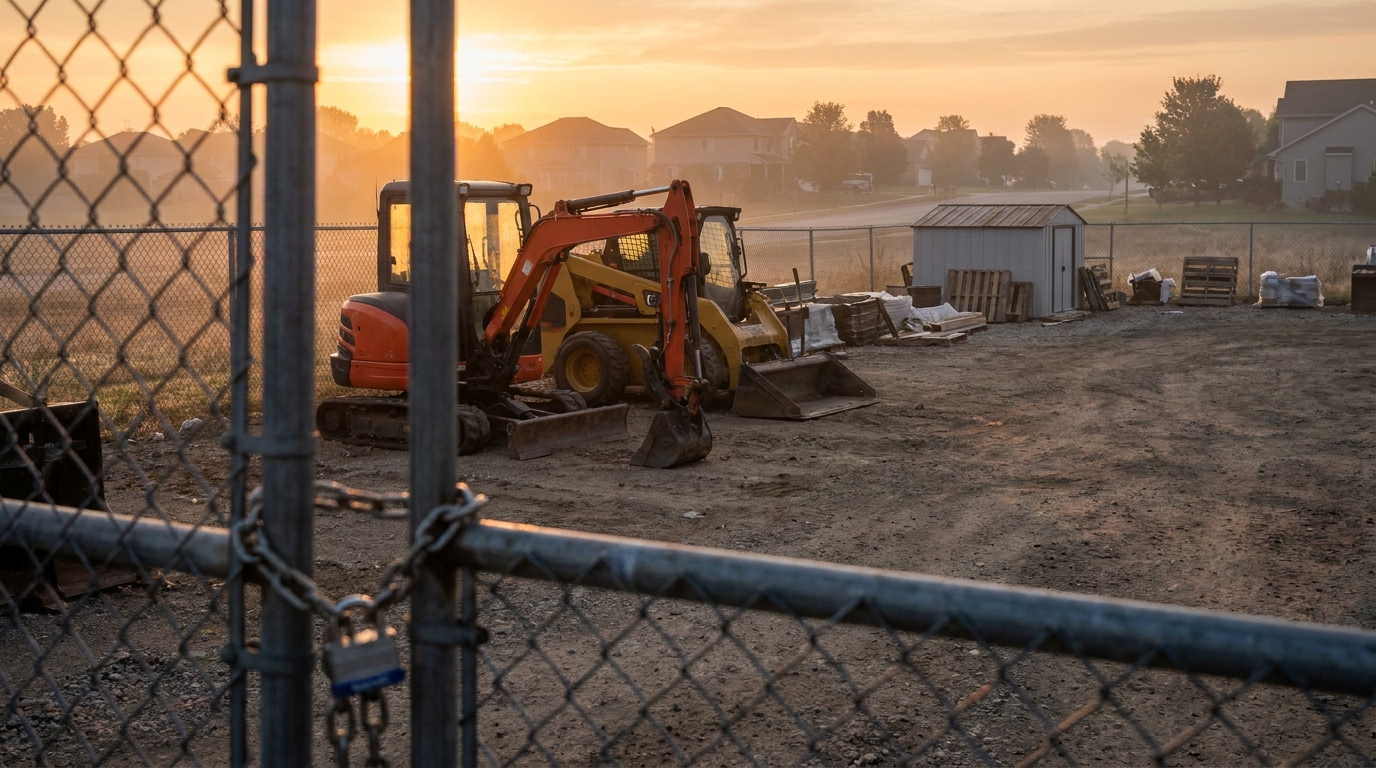
In practice, the machines most often taken are not the largest. Cranes and large bulldozers are slow, conspicuous and hard to move without specialist transport, which makes them poor targets for opportunistic theft. Compact equipment such as skid steers, mini excavators, compact loaders, telehandlers and small rollers is easier to load on a trailer and easier to resell, so it tends to be at higher risk.
Large machines are not immune. They can still be moved by organized groups with the right transport, and they are regularly targeted for parts, batteries, diesel fuel, attachments and onboard electronics. This is why a prevention plan for heavy equipment theft should cover the whole machine and everything attached to it or stored nearby.
Common Theft Patterns on Jobsites and in Yards
Most losses follow a predictable timing pattern. Equipment is left unattended overnight, over weekends, during holiday shutdowns or between project phases, when few people are on site to notice something unusual. Remote or partially completed sites, where fencing and lighting are not yet in place, add to the exposure.
Access is often easier than owners expect. Many machines from the same manufacturer or fleet can be started with common or duplicated keys, and keys left in cabs, site trailers or unlocked toolboxes remove the need to defeat any security at all. Thieves may also pose as legitimate operators, haulers or rental returns, arriving in daylight with a trailer and a plausible story.
Partial theft is just as common as whole-machine theft. Catalytic components, batteries, fuel, hydraulic attachments, buckets, GPS units and copper or other metals can be removed quickly and are harder to trace. These losses are often discovered days later, which complicates claims because the exact time of the incident is unknown.
Building a Layered Prevention Plan
No single measure stops determined theft, so effective prevention relies on layers that each add delay and risk for the thief. Start with the basics: control keys and keep an inventory of who holds them, never leave keys in machines, and remove or lock out starting systems where the equipment allows. Where possible, use immobilizers, battery disconnect switches, steering or track locks and hydraulic lockouts for machines that will sit idle.
Parking practices matter more than many fleets assume. Park machines close together, nose-to-tail or with their attachments facing in, so that moving one requires moving others. Keep them away from the fence line and out of view of public roads where practical, and block access with other equipment or heavy barriers. Good lighting and a secured, single-entry gate make unauthorized loading more difficult and more visible.
Add telematics and tracking to higher-value or more attractive machines. GPS units can show location, trigger movement or geofence alerts outside working hours, and give police a lead if the machine leaves the site. Hide or duplicate trackers where feasible, since thieves often look for the obvious unit first. Treat tracker data as part of your loss record, not only as a recovery tool.
Detection and Documentation: Seeing Theft While It Matters
Physical barriers slow thieves down, but they only help if someone learns about the intrusion in time to respond. Cameras that are monitored or that generate alerts for after-hours activity turn a quiet loss discovered on Monday into an event that can be acted on while it is happening. For sites that already have cameras, the question is often not whether to add more, but whether the existing ones are working, aimed at the equipment and connected to someone who will see an alert.
Documentation is the other half of detection. A clear record of who or what entered the yard, at what time, and which machine or attachment was affected supports both police reports and insurance claims. Snapshot-based evidence with timestamps is easy to share, easy to attach to a claim file and quick to review, compared with searching hours of footage after the fact.
Equally important is the baseline record of what you own. Keep up-to-date photos of each machine, including its condition, attachments and any distinguishing marks. Record the product identification number or serial number, make, model, year and any tracker identifiers in a register stored away from the site, so the information is available even if the site office is broken into.
What to Do in the First Hours After a Theft
Speed improves the odds of recovery. Confirm that the equipment is actually missing and not relocated by another crew, then report it to the police right away with the serial or identification number, photos and any tracker data. If a GPS tracker is installed, share the location history with the investigating officers instead of attempting a recovery yourself.
Notify your insurer promptly and follow the claim procedures in your policy. Preserve all relevant evidence, including camera snapshots, access logs, key records, delivery or rental paperwork and the last known photos of the equipment. Prompt notification and organized records generally reduce disputes about when the loss occurred and what was taken.
Beyond the first report, widen the search. Alert your local dealers, rental yards, auction houses and nearby contractors with a description and serial number, and watch online marketplaces for matching listings. Stolen machines are often resold quickly or moved to another region, so the serial number record and any distinguishing marks are what make a recovered machine identifiable.
What Insurers and Fleet Managers Should Review
Policies for contractor equipment often contain conditions about how machines are secured, so owners should read them closely. Requirements about locked keys, fenced storage, tracking devices or unattended periods can affect how a claim is evaluated. Rules differ by insurer and jurisdiction, so confirm the specifics with your broker rather than assuming a loss is covered under any circumstances.
Fleet managers can support underwriting and claims by keeping a current equipment schedule with values, serial numbers and photographs, and by recording the security measures in place at each site. A short site checklist covering fencing, lighting, key control, parking layout, tracker status and camera function gives a consistent view across projects. Reviewing it after every theft or near miss turns individual losses into process improvements.
Rental and subcontractor arrangements deserve particular attention. Clarify in writing who is responsible for securing equipment, who holds the keys and what happens when a machine is left on a third-party site. Gaps in responsibility are a common source of both theft exposure and claim disagreements.
Conclusion
Heavy equipment theft is a persistent risk, most often affecting compact, easily transported machines and the parts, fuel and attachments of larger ones. The strongest defense is layered: key control, physical locks and parking discipline, tracking, and a clear record of the equipment you own. Prompt reporting with accurate identification data improves the chance of recovery and keeps claims on firmer footing.
For sites that already have cameras, Patrol Sense can apply AI detection to those existing cameras, send real-time alerts when activity is detected after hours and keep snapshot evidence with timestamps for police and insurers. Camera health monitoring and a multi-site dashboard also help fleet managers confirm that coverage is working across yards and projects. Used alongside physical controls and tracking, this gives owners earlier warning and cleaner documentation when something goes wrong.
Frequently asked questions
Are cranes and bulldozers actually stolen?
It happens, but large machines are harder to move and sell without attracting attention, so they are less common targets than compact equipment. They are still at risk of component, battery, fuel and attachment theft. Organized groups with proper transport can also take large machines.
Does GPS tracking stop equipment theft?
Tracking does not physically prevent theft, but it can deter it and greatly improves the chance of locating a machine. Movement and geofence alerts can warn owners outside working hours. Trackers work best combined with locks, secure parking and prompt police reporting.
What information do police need to recover a stolen machine?
Police typically need the make, model, year and serial or product identification number, along with photos and any tracker data. Distinguishing marks, attachments and the last known location also help. Keeping this information in a register away from the site means it is available immediately after a loss.
Does insurance cover stolen heavy equipment?
Coverage depends on the policy, and many include conditions about how equipment is secured or left unattended. Review the terms with your insurer or broker and notify them promptly after a loss. Well-organized records, such as photos, serial numbers and incident evidence, support the claim process.
When is heavy equipment most at risk of theft?
Risk is generally higher when machines sit unattended, such as overnight, on weekends and during holiday shutdowns. Sites with incomplete fencing, poor lighting or loosely controlled keys are also more exposed. Regular site checks during these periods help reduce the opportunity.