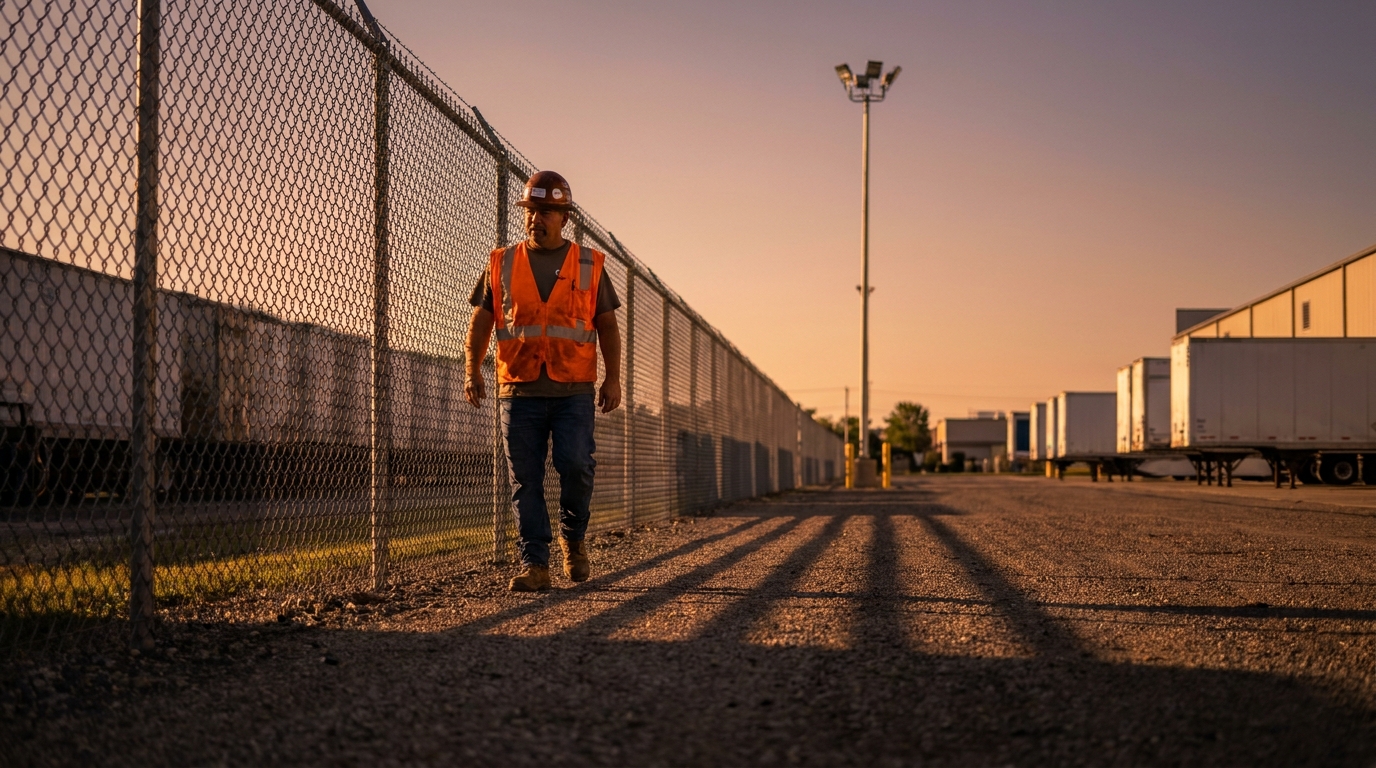
What Actually Deters Fence Cutting
The most effective fence cutting deterrence alarm is not a single device but a sequence of obstacles and consequences that makes an attempt look slow, visible and likely to be answered. Someone deciding whether to cut a fence is weighing time, visibility and the chance of a response. Each layer you add changes that calculation, and cameras alone address only part of it.
A practical layered model has four parts: a physically maintained fence line, lighting and sight lines that expose activity, detection that alerts staff while the attempt is happening, and documented evidence that supports repair, recovery and claims. The sections below take them in order. Adding a fifth or sixth camera usually helps less than making sure the existing ones are positioned, configured and monitored for the fence line.
Layer One: Make the Fence Line Hard to Attempt
Deterrence starts with the condition of the barrier. Fences that are sagging, overgrown or already patched signal that nobody is paying attention. Regular walk-throughs that check for loose ties, gaps at the base, damaged posts and old repairs are inexpensive and give you a baseline to compare against after an incident.
Visibility matters as much as the material. Clear vegetation, stacked pallets, containers and parked equipment away from the fence so that nobody can work behind cover. Make sure lighting covers the fence line itself rather than only the buildings, and replace failed fixtures promptly. Where it is appropriate for your site and permitted locally, visible signage that states the area is monitored reinforces the message, although signage rules and wording requirements vary by jurisdiction.
None of these steps stops a determined person, but they raise the effort and the perceived risk. They also make the next layer more effective, because a well-lit, uncluttered fence line gives cameras a clear view of what is happening.
Layer Two: Detect Activity at the Fence Line With Existing Cameras
Many sites already have cameras that cover part of the perimeter but are used only for review after something goes wrong. The aim here is to turn those same cameras into an early warning source. Start by identifying which existing cameras have a usable view of each fence section, and note where the gaps and blind corners are. Fixing a bad angle or an obstructed lens is often more valuable than buying new equipment.
AI detection on those cameras can flag a person or vehicle at the fence line during hours when nobody should be there. It is worth being precise about what this does. Camera-based detection recognizes activity such as a person lingering at or crossing the boundary, rather than sensing the cutting itself. If you also use dedicated fence sensors, treat them as a separate layer that can complement camera alerts.
Camera health is the quiet failure point in perimeter programs. A lens that is dirty, misaligned or offline during the night leaves a stretch of fence unwatched without anyone knowing. Monitoring camera status, so that a dropped feed or a blocked view is flagged, keeps the detection layer reliable between inspections.
Layer Three: Alerts That Reach the Right Person With a Clear Next Step
An alert only deters if someone acts on it. Decide in advance who receives fence-line alerts after hours, such as the site supervisor, an on-call manager or a monitoring partner, and what each person is expected to do. Alerts that go to a shared inbox nobody reads at night provide documentation but not deterrence.
Write a short response routine and keep it simple. For example: review the alert image to confirm what it shows, decide whether the situation is routine activity or a possible breach, and escalate according to your site policy. Staff safety should come first, so the routine should make clear when personnel should not approach the fence themselves and when to contact the appropriate authorities or a security provider.
Tune the schedule and zones to reduce noise. Alerts that fire for every delivery or maintenance visit train people to ignore them. Limiting fence-line alerting to the hours and areas that matter, and adjusting after the first few weeks of real use, keeps the signal credible.
Snapshot Evidence for Response and Claims
When an alert fires, a time-stamped snapshot shows responders what is happening at that moment without requiring them to scrub through footage. It helps a supervisor decide quickly whether the situation needs escalation, and it gives anyone who arrives later a record of what was seen. Patrol Sense evidence is snapshot-based rather than video clips, which keeps the record focused on the moments that matter.
The same snapshots support the paperwork that follows. A fence repair, stolen materials or damaged equipment usually requires an account of when the breach happened, where and what was affected. A sequence of dated images of the fence line, combined with your inspection records, gives insurers, adjusters and internal stakeholders a clearer picture than recollection alone. Requirements for evidence handling and retention differ by insurer and jurisdiction, so confirm them with your carrier or counsel.
Keep the images organized by site, location and date, and store them alongside the incident report and the repair invoice. A consistent package makes it easier to compare incidents over time and to show that the site had reasonable protections in place.
Reviewing Patterns and Keeping the Layers Working
After each incident or near miss, review where the attempt occurred and what the cameras captured. Repeated activity at the same corner or gate suggests that section needs better lighting, a different camera angle, a heavier fence component or more frequent patrols. Patterns are easier to see when alerts and images are collected in one place rather than scattered across inboxes and notebooks.
For organizations with several properties, a multi-site view helps compare fence-line activity and camera status across locations. It also helps identify which sites have unresolved gaps, such as cameras that have been offline or sections that have repeatedly been breached. Schedule a periodic review of zones, alert recipients and camera views, particularly after construction, landscaping changes or staffing changes that alter how the perimeter is used.
Conclusion
Deterring fence cutting without relying only on more cameras means treating the perimeter as a system: a maintained and visible fence line, detection on the cameras you already own, alerts that reach someone with a defined response, and evidence that supports repairs and claims. Each layer is modest on its own, and together they change how exposed an attempt feels to the person making it.
Patrol Sense supports this approach by applying AI detection to existing cameras, sending real-time alerts and attaching snapshot evidence to each incident, with camera health monitoring and a multi-site dashboard to keep coverage dependable. Because it works with your current cameras, you can begin by strengthening the fence-line views you already have and refine from there.
Frequently asked questions
Do cameras alone stop people from cutting a fence?
Cameras can discourage some attempts, but they rarely stop a determined person on their own, especially if nobody is watching in real time. Deterrence improves when cameras are paired with a maintained fence, good lighting, alerts to staff and a defined response.
Can existing cameras be used to alert staff to a fence breach?
Often yes, if a camera has a usable view of the fence section. AI detection can flag a person or vehicle at the boundary during set hours and send an alert with a snapshot. It detects activity at the fence line rather than the cutting itself, so dedicated fence sensors remain a separate option.
What should staff do when a fence-line alert arrives?
Staff should review the alert image, judge whether it shows routine activity or a possible breach, and follow the escalation steps in the site policy. Personnel should avoid approaching the fence themselves when it could put them at risk, and should contact the appropriate authorities or security provider as policy directs.
How does snapshot evidence help with a fence damage claim?
Time-stamped snapshots document when and where a breach occurred and what was affected. Combined with inspection records and repair invoices, they give insurers a clearer account of the event. Documentation requirements vary by insurer and jurisdiction, so check with your carrier.
How often should a perimeter fence be inspected?
The right frequency depends on the site's risk, size and history of incidents, so there is no single standard. Many teams combine routine walk-throughs with extra checks after storms, construction or any alert at the fence line, and record the results to establish a baseline.