Why Copper Theft Keeps Recurring on Commercial Sites
Copper theft persists because the metal is valuable, easy to resell as scrap, and installed in places that are often unattended after hours. Industry commentary, including a recent Pro-Vigil article on rising copper theft, points to the same pattern: thieves target equipment that is exposed, quiet at night and quick to strip. The practical consequence for a property operator is that the loss is rarely just the metal.
The cost usually sits in the damage around it. A stripped condenser, cut feeder cable or missing pipe run can mean emergency repair, tenant disruption, downtime and a claim, all out of proportion to what the thief resold. That mismatch is why copper theft prevention on commercial property belongs in risk planning and not only in routine security checks.
A workable response has three parts: reduce how easy the assets are to reach, detect people in those areas outside normal hours, and capture evidence that supports an insurance claim. The sections below take each in turn.
Which Copper Assets Are Most Exposed
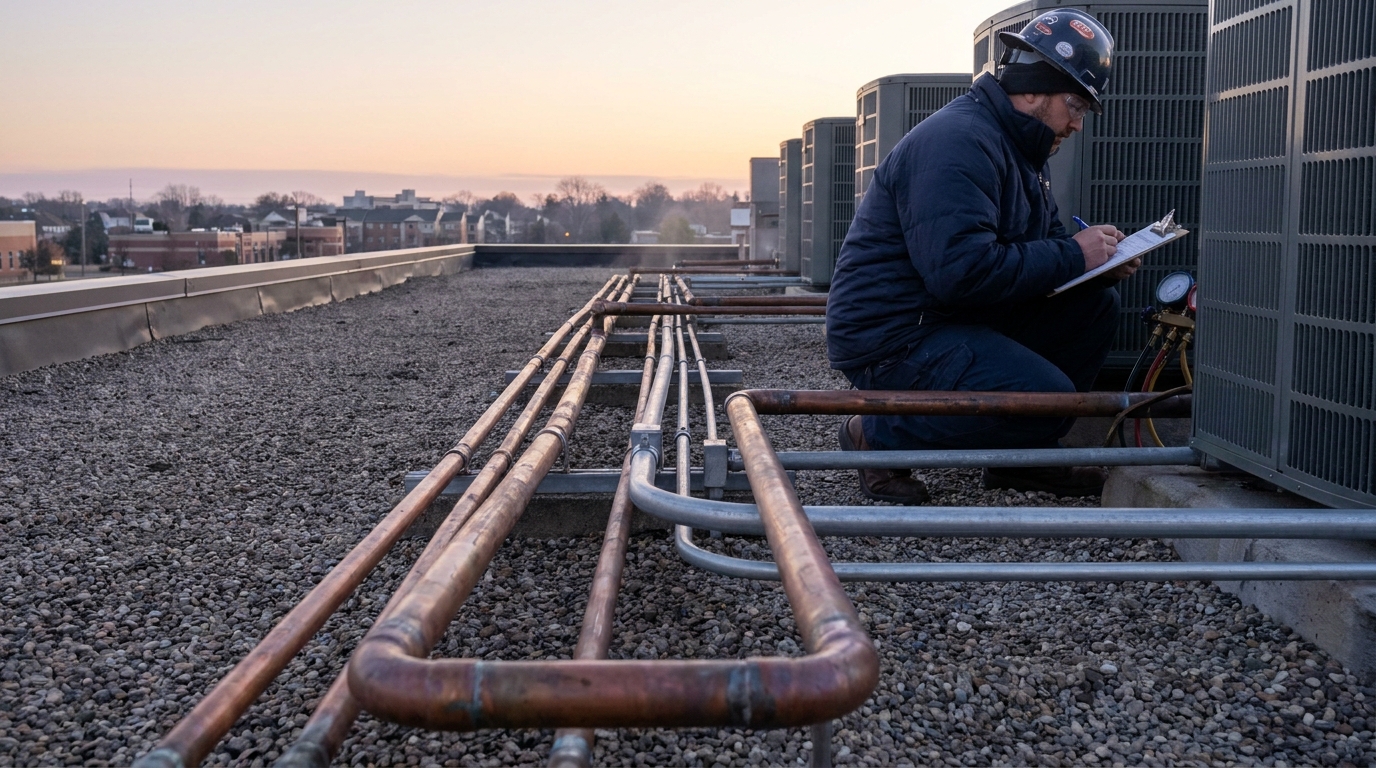
Start with an asset walk of every site, ideally with maintenance and electrical contractors who know where copper is installed. Common targets include rooftop and ground-level HVAC condensers and their coils and line sets, exterior electrical conduit and feeder cabling, grounding conductors, meter and switchgear enclosures, and plumbing runs in vacant or under-renovation spaces. Building material and spare cable stored in yards or loading areas are also frequent targets.
Rank each location by two factors: how reachable it is, and how long a theft would go unnoticed. A condenser pad behind a building, out of sight of staff and lit poorly, scores high on both. A vacant tenant suite with exposed pipework, or a unit awaiting commissioning during a renovation, is similarly at risk because nobody is checking it daily.
Record the results in a simple register with location, asset type, access route and current camera coverage. That register becomes the basis for security decisions and, later, for proving what was installed if a claim is needed.
Hardening the Physical Layer First
Cameras do not replace physical controls, and insurers and security professionals generally expect both. Basic measures include locked and tamper-resistant equipment cages, secured roof access, controlled ladders and hatches, adequate lighting on equipment pads, and removing stored copper or spare materials from open yards. Where equipment is vulnerable, ask your HVAC and electrical vendors about protective enclosures and marking options suited to the unit.
Marking assets and keeping serial numbers and photographs on file also helps if stolen equipment is ever recovered or a claim needs substantiating. Rules on scrap metal purchasing and record-keeping differ by jurisdiction, so check with local authorities and your counsel about what applies in your area and what your police contact can do with that information.
Physical hardening raises the time and effort required. Detection then determines whether someone can complete the job unobserved.
Using Existing Cameras for After-Hours Detection
Most commercial sites already have cameras covering parking areas, loading docks, roofs and building perimeters, but nobody watches them overnight. Recording alone tells you what happened after the damage is discovered. AI detection applied to the existing cameras can flag a person or vehicle in a restricted area outside business hours and send a real-time alert, so a responder can act while the incident is still unfolding.
To make alerts useful, tie them to a schedule and a place. A person on a rooftop at 2 a.m., or in a fenced equipment yard on a Sunday, is a meaningful event. The same person in a staffed lobby at noon is not. Decide in advance who receives the alert, what they check first and when they escalate to a guard company or the police, and write that down as a short response procedure.
Multi-site operators benefit from seeing alerts across properties in one dashboard, which lets a central team apply the same response standard everywhere instead of relying on each site manager's habits.
Closing Coverage Gaps and Keeping Cameras Healthy
Review each high-risk asset against the camera map. Common gaps are rooftops with no camera, equipment pads at the edge of a camera's field of view, and lighting too poor at night for reliable detection. Small adjustments, such as re-aiming an existing camera or adding a light, often close the gap without a new system.
Camera health is a frequent weak point. A camera that went offline or was knocked out of position weeks ago will not capture the one night that matters. Monitoring for offline or obstructed cameras, and acting on those notices promptly, keeps the detection layer dependable. Treat a camera outage near a copper asset as a security event in its own right, especially if it coincides with other unusual activity.
Documenting Incidents for Insurers and Recovery
When a theft is discovered, preserve evidence before repairs begin. Take dated photographs of the damage and the surrounding area, keep the removed or damaged components if possible, and file a police report promptly, since insurers typically ask for a report number. Snapshot evidence from the camera system that shows when a person or vehicle appeared at the location gives the claim a clear, time-stamped starting point and helps the investigator establish the sequence of events.
Assemble a single incident file: the asset register entry, installation and maintenance records, snapshots with timestamps and camera locations, the alert log showing who was notified and when, repair estimates and invoices, and the police report. Insurers differ in what they require and what policies cover, including how copper-related damage and business interruption are treated, so review your policy terms and notify your broker early.
A consistent file also supports conversations beyond the insurer, such as with a landlord, a tenant or a contractor responsible for a vacant space. Organised evidence shortens disputes about who bears the loss and what actually happened.
Conclusion
Copper theft prevention on commercial property comes down to knowing which assets are exposed, hardening access, detecting after-hours presence quickly and keeping a clean evidence trail for the claim. None of these steps depends on replacing your camera infrastructure. Patrol Sense applies AI detection to the cameras you already have, sends real-time alerts, monitors camera health across sites and produces snapshot-based evidence that can be added to an insurance file.
A sensible next step is to build the asset register, match it to your camera coverage and agree an after-hours response procedure with your security provider. Doing this before an incident makes both prevention and recovery considerably more straightforward.
Frequently asked questions
What copper assets do thieves target most on commercial properties?
Common targets are HVAC condenser coils and line sets, exterior electrical conduit and cabling, grounding conductors, and plumbing runs in vacant or renovated spaces. Stored cable and materials in open yards are also at risk. An asset walk with maintenance and electrical contractors shows which of these exist on your site.
Can existing security cameras help prevent copper theft?
Yes, if they cover the exposed areas and someone is alerted when a person or vehicle appears there outside business hours. AI detection on existing cameras can send real-time alerts so a responder can act during the incident. Coverage gaps, poor lighting and offline cameras should be fixed first.
What should I do immediately after discovering copper theft?
Photograph the damage with dates, preserve any removed components, make the area safe and file a police report. Notify your insurer or broker before repairs where possible, and gather any camera snapshots and alert logs for the relevant period. Requirements differ by policy and jurisdiction.
What documents do insurers usually want for a copper theft claim?
Typical requests include a police report number, photographs of the damage, proof of ownership or installation records, repair estimates and invoices, and any available evidence showing when the incident occurred. Exact requirements vary by insurer and policy, so confirm them with your broker.