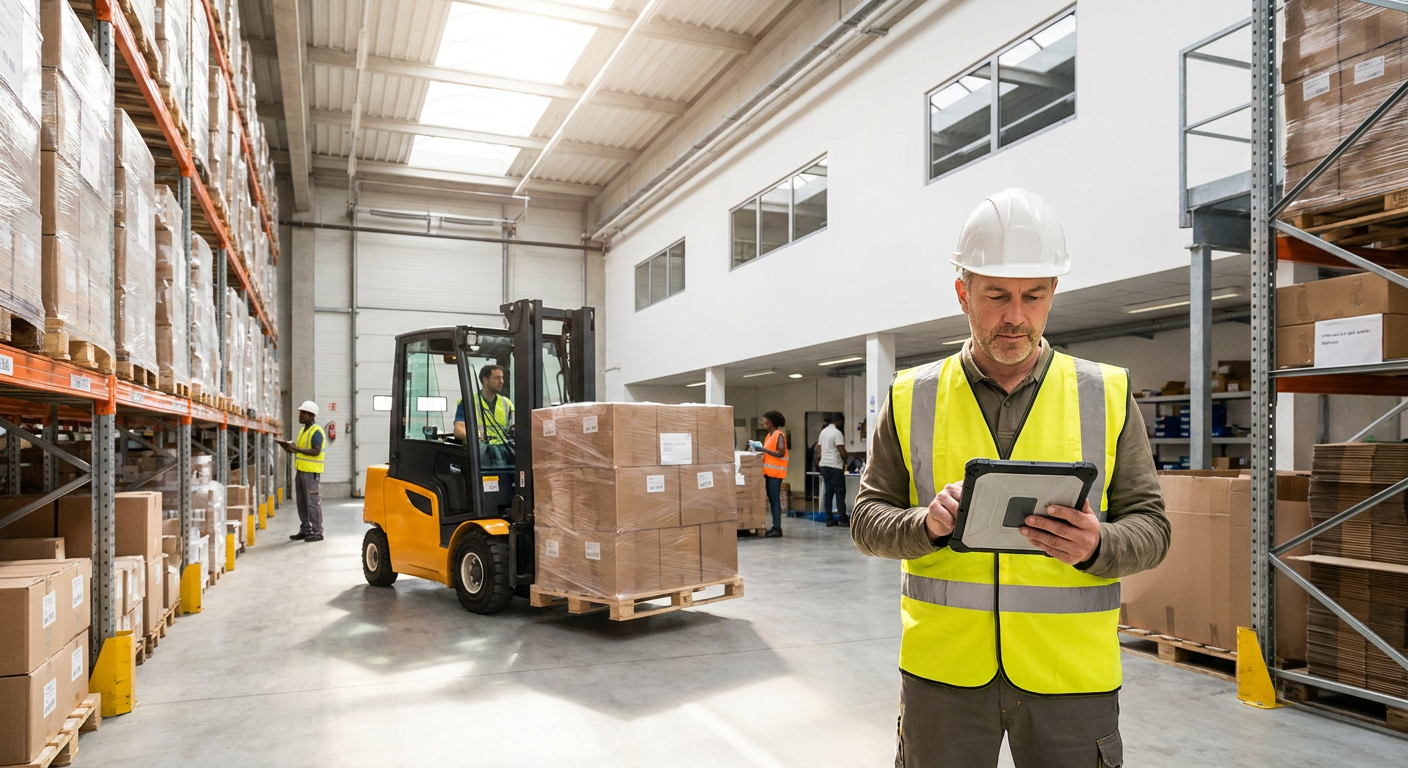
The Dual Challenge of Warehouse Operations: Safety and Efficiency
Modern warehouses are complex ecosystems, vital cogs in the global supply chain. They balance the relentless demands of throughput and efficiency with the critical imperative of safety. Any disruption, from a minor workplace accident to a significant security breach, can have cascading effects on productivity, profitability, and employee well-being.
Traditional approaches to managing these challenges often rely on manual oversight, periodic audits, and reactive responses. While essential, these methods can be time-consuming, resource-intensive, and prone to human error, particularly when dealing with the sheer volume of activity within a large logistics facility. The need for smarter, more proactive solutions is clear.
The sheer scale of activity in a warehouse, from forklift movements to inventory handling, creates numerous potential points of failure. Incidents can range from minor property damage and operational delays to serious injuries. Effective management requires not just detection, but also meticulous documentation for investigation and compliance.
Beyond Basic Monitoring: The Power of AI Visuals
While security cameras are ubiquitous in warehouses, their potential as a proactive operational asset often remains untapped. Most systems primarily serve as forensic tools, used after an event has occurred. However, integrating AI-powered visual analytics transforms these existing camera feeds into intelligent, real-time detectors.
AI goes beyond simple motion detection, understanding complex scenarios like unauthorized access, improper material handling, or personnel entering restricted zones. This intelligent analysis provides a layer of operational awareness that human monitoring alone cannot achieve consistently, especially across vast facilities.
The ability to interpret visual data in real-time allows for immediate alerts when anomalies or potential incidents are detected. This shifts the paradigm from reactive investigation to proactive intervention, significantly reducing the impact of unforeseen events on both safety and operational flow.
Streamlining Incident Documentation with Snapshot-Based Evidence
One of the most significant advantages of AI-powered visual security is its capacity for automated, high-quality incident documentation. Rather than sifting through hours of video, AI systems can pinpoint the exact moment of an event and capture detailed snapshots.
This snapshot-based evidence is crucial for several reasons. It provides objective, timestamped visual proof of what transpired, free from the biases of eyewitness accounts. This level of detail is invaluable for internal investigations, training improvements, and liability assessments.
The precision of AI-captured visual evidence streamlines the entire incident reporting process. From initial alert to final review, teams can quickly access and analyze relevant images, ensuring accuracy and accelerating resolution. This efficiency contributes directly to maintaining operational continuity and minimizing downtime.
Enhancing Workplace Safety and Compliance Readiness
In a warehouse environment, safety is paramount, and regulatory compliance is non-negotiable. AI-powered visual systems act as an always-on observer, identifying potential hazards before they escalate into incidents. This includes detecting unsafe behaviors, unapproved equipment use, or spills that could lead to slips and falls.
The continuous monitoring and automated alerting capabilities allow safety managers to address concerns in real-time, enforcing safety protocols more effectively. Regular review of AI-generated incident logs can also reveal patterns, informing targeted training programs and procedural adjustments.
Furthermore, having a robust system for visual incident documentation significantly strengthens a facility's compliance posture. In the event of an audit or incident investigation, readily available, clear visual evidence demonstrates a commitment to safety standards and can be critical for legal and insurance purposes.
Optimizing Operational Flow and Asset Protection
Beyond safety, AI visuals contribute directly to operational efficiency. By monitoring critical zones and processes, AI can identify bottlenecks, improper staging of goods, or unusual activity that might indicate theft or misplaced inventory. This allows for rapid corrective action, preventing delays and losses.
The ability to track and document the movement of high-value assets or critical equipment provides an additional layer of security. Any deviation from established routes or unauthorized removal can trigger immediate alerts, safeguarding inventory and improving accountability.
By reducing incidents, minimizing downtime, and deterring theft, AI-powered visual documentation directly supports the core objective of a warehouse: to move goods efficiently and securely. The resulting data provides actionable insights for continuous process improvement and risk mitigation across the entire operation.
Conclusion
Warehouse and logistics facilities are undergoing a digital transformation, and AI-powered visual analytics stands at the forefront of this evolution. By transforming existing camera infrastructure into intelligent, proactive safety and operational assets, businesses can achieve new levels of efficiency, security, and compliance.
The ability to automatically generate clear, timestamped, snapshot-based evidence empowers operations teams to respond faster, investigate thoroughly, and implement preventative measures with greater precision. This strategic investment in AI technology yields significant returns in terms of reduced incidents, enhanced safety, and streamlined operations.
Platforms like Patrol Sense leverage existing camera infrastructure to provide these critical AI capabilities, delivering real-time incident detection and robust visual evidence without the need for proprietary hardware. This approach ensures that warehouses can enhance their operational resilience and protect their most valuable assets – their people and their inventory.