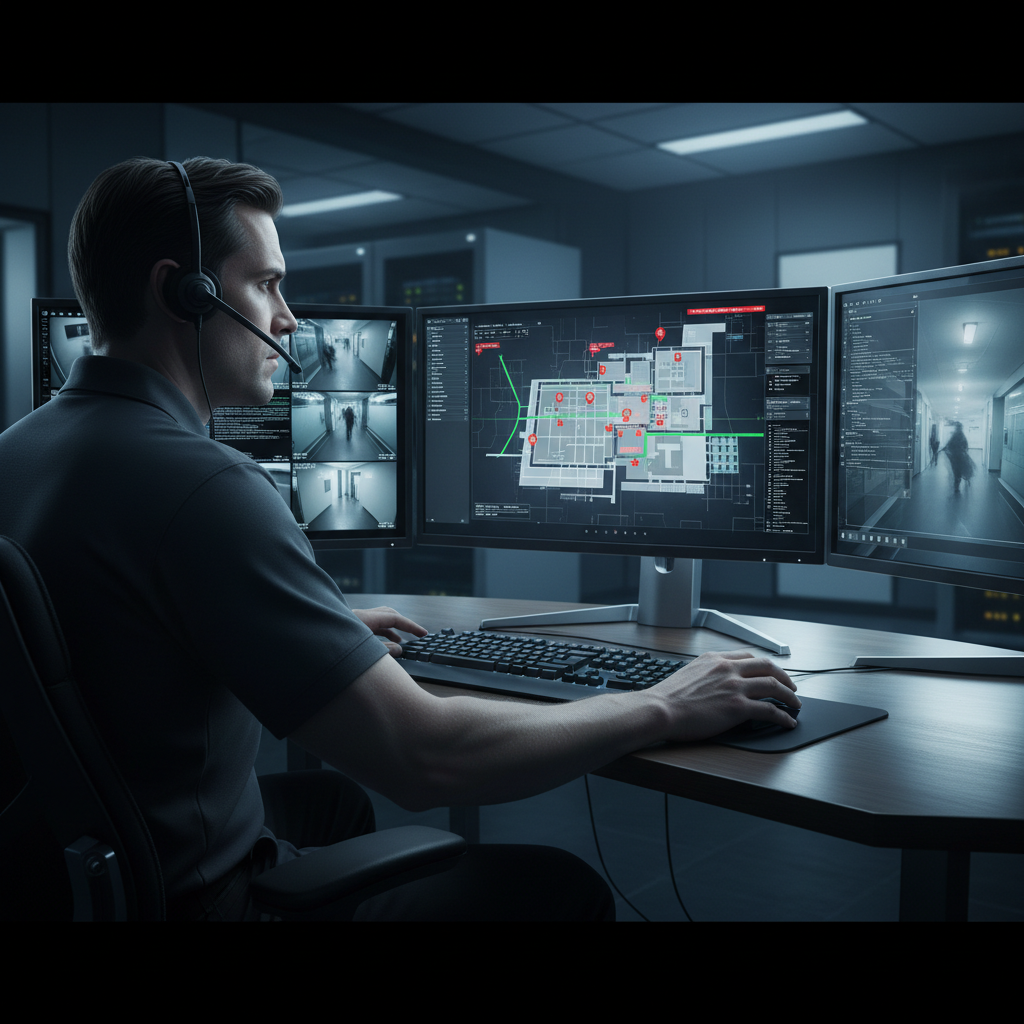
The Imperative of Real-Time Security Alerts
In enterprise security, the speed at which incidents are detected and responded to directly impacts outcomes. Timely alerts are not merely beneficial; they are fundamental to mitigating damage, ensuring safety, and preserving assets.
Traditional alert systems often provide notification without immediate context, requiring security personnel to manually investigate. This delay can prove critical, especially when addressing rapidly unfolding situations.
The effectiveness of a security operation is frequently measured by its ability to transition from detection to decisive action. Real-time alerts are the first critical step in this process, demanding robust and informative delivery.
Elevating Alerts with AI-Powered Visual Evidence
Integrating AI with existing camera infrastructure transforms basic alerts into actionable intelligence. Instead of just a notification, security teams receive immediate visual verification of an event, complete with relevant snapshots.
This visual evidence provides instant context, allowing operators to understand the nature and severity of an incident without delay. It enables a more informed and rapid decision-making process.
The ability to see what is happening in real-time, through verified visual data, significantly reduces the time from alert generation to effective response. This mitigates potential escalation and improves overall security posture.
Accelerating Incident Verification and Triage
When an alert is triggered, the immediate challenge is to verify its legitimacy and assess the threat. AI-powered visual alerts streamline this verification by providing snapshot-based evidence directly with the notification.
This instant visual context eliminates the need for security personnel to navigate through video feeds or dispatch personnel for initial assessments. They can quickly confirm the event and initiate appropriate protocols.
Efficient triage is essential for allocating resources effectively. With clear visual evidence, security teams can prioritize critical incidents, ensuring that high-risk situations receive immediate attention, improving operational efficiency.
Enhancing Proactive Response Strategies
Real-time visual alerts move security from a reactive stance to a more proactive one. By leveraging AI to detect anomalies and provide instant visual proof, potential threats can be addressed before they fully materialize.
For instance, identifying unauthorized access or unusual activity in restricted areas immediately allows security to intervene. This preemptive capability can prevent significant losses or safety breaches.
Such proactivity is invaluable for diverse environments, from large commercial properties to industrial facilities. It empowers security staff to anticipate and mitigate risks rather than respond solely to their aftermath.
Streamlining Cross-Departmental Communication
Incident response often involves collaboration across multiple internal departments or external agencies. Clear, concise, and immediate visual evidence facilitates this communication.
Sharing snapshot-based evidence ensures everyone involved has a consistent understanding of the situation. This eliminates ambiguity and enables coordinated response efforts.
Providing definitive visual proof in real-time aids in constructing a comprehensive incident log from the outset, benefiting subsequent investigations, reporting, and claims processing.
Conclusion
The evolution of real-time security alerts, driven by AI and visual evidence, marks a significant advancement in incident response capabilities. By providing immediate contextual information, these systems empower security teams to react faster, more accurately, and more proactively.
This shift from mere notification to informed, visual alert delivery enhances operational efficiency, improves safety, and strengthens overall security posture. Organizations seeking to optimize their incident management protocols will find this integration indispensable.
Platforms like Patrol Sense exemplify this innovation by transforming existing camera infrastructure into a sophisticated real-time incident detection system, delivering snapshot-based, claim-ready evidence directly to security personnel.