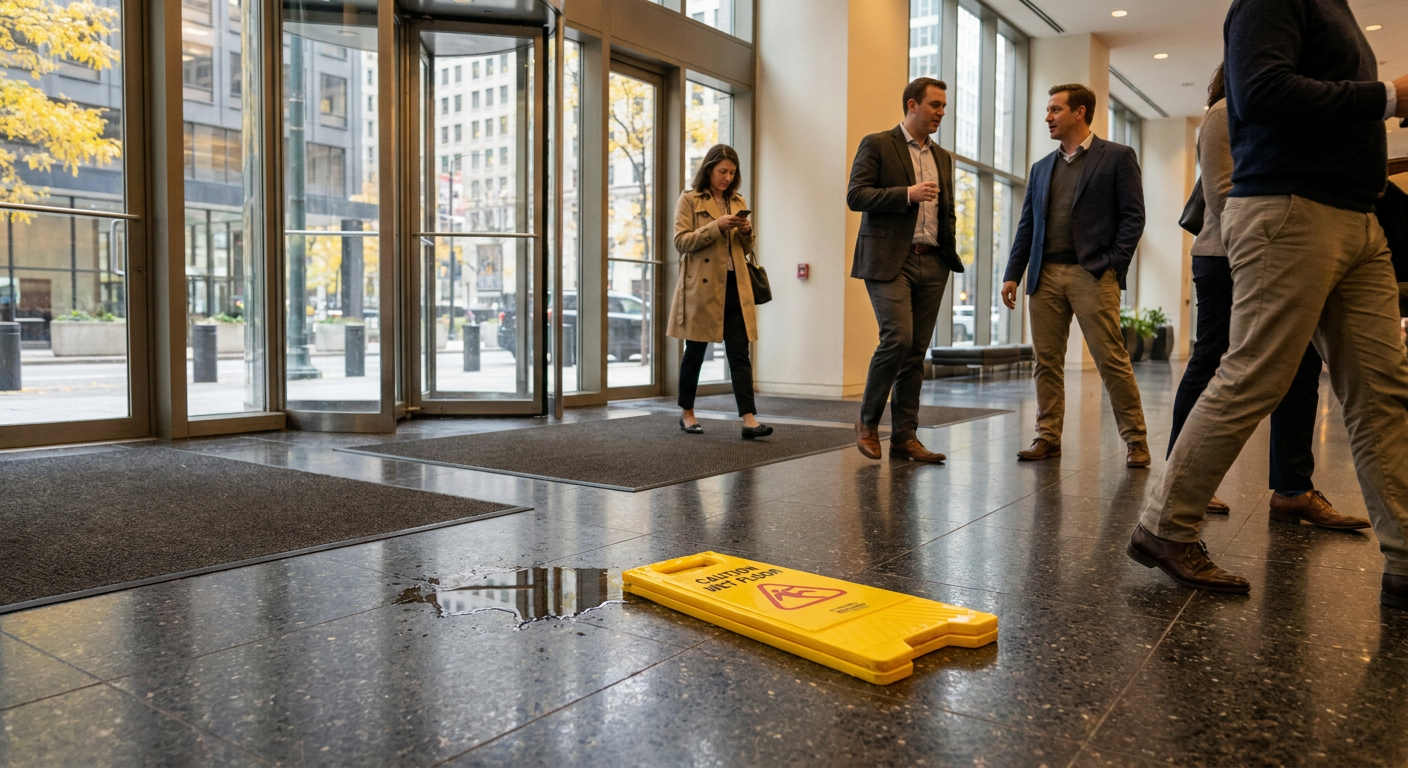
The Persistent Challenge of Slip and Fall Incidents
Slip and fall incidents remain a leading cause of premises liability claims, incurring substantial costs for businesses across various sectors. These events often result in injuries, legal battles, increased insurance premiums, and reputational damage. Proving negligence or defense often hinges on the quality and timeliness of available evidence.
Traditional security measures and manual inspections often prove insufficient in preventing every potential hazard or capturing the crucial moments leading up to an incident. The retrospective nature of most evidence collection further complicates liability assessment, leaving businesses vulnerable.
A proactive approach to identifying and documenting environmental risks before they escalate into incidents is critical. This shift moves beyond reactive response to a preventative posture, directly impacting a business's bottom line and operational stability.
Beyond Reactive: Embracing Proactive Visual Documentation
While incident response is vital, the true differentiator in liability mitigation lies in proactive strategies. Proactive visual documentation involves continuously monitoring environments for conditions that could lead to a slip and fall. This includes detecting spills, uneven surfaces, misplaced objects, or adverse weather effects like accumulated rain or ice.
This approach leverages existing visual infrastructure to identify potential hazards in real-time or near real-time. By documenting these conditions as they arise, businesses can intervene promptly, addressing risks before an injury occurs. This creates a valuable record of due diligence.
The goal is not just to record an incident, but to record the conditions that might cause one, enabling swift action. This significantly reduces the likelihood of an actual slip and fall, and if one does occur, provides clear evidence of preventative efforts.
Leveraging Existing Cameras for Enhanced Hazard Detection
Many commercial properties already possess extensive networks of surveillance cameras for various security purposes. These existing assets represent an untapped resource for advanced slip and fall prevention when integrated with intelligent analytics. The absence of proprietary hardware requirements simplifies adoption.
By applying AI to analyze existing camera feeds, businesses can transform passive monitoring into active hazard detection. This allows for continuous scanning of areas prone to slip and fall incidents, such as entryways, hallways, loading docks, and parking lots.
This method avoids the significant capital expenditure and disruption associated with installing new, specialized hardware. It maximizes the value of current investments by expanding their utility beyond traditional security to include proactive safety and risk management.
The Power of Snapshot-Based Evidence for Claims
In the event of a slip and fall claim, comprehensive and clear evidence is paramount. Snapshot-based evidence, capturing key moments before, during, and after a potential hazard or incident, offers undeniable clarity. Unlike video, snapshots precisely isolate critical visual information.
These timestamped images can document a liquid spill before it's cleaned, an obstruction in a walkway, or a worn floor surface. This type of evidence can confirm whether a hazard existed, how long it was present, and what actions were taken to address it, providing a factual basis for insurance adjusters and legal teams.
Such detailed visual records streamline the claims process, often leading to quicker resolutions and reduced litigation. They demonstrate a business's commitment to safety and help distinguish between legitimate claims and opportunistic ones, safeguarding against unnecessary payouts.
Reducing Insurance Premiums and Legal Exposure
A robust, proactive slip and fall prevention strategy directly impacts a business's liability exposure and, consequently, its insurance costs. Insurers often look favorably upon proactive risk management initiatives, which can translate into more favorable premium rates. Reduced incidents mean fewer claims.
By systematically documenting preventative actions and hazard remediation, businesses build a strong defense against potential lawsuits. This continuous record demonstrates due diligence and a commitment to maintaining safe premises, which is a powerful deterrent to litigious actions.
The financial benefits extend beyond lower premiums to include reduced legal fees, settlement costs, and the indirect costs of operational disruption. Investing in proactive visual documentation is an investment in long-term financial stability and reputation.
Conclusion
The landscape of premises liability demands evolving strategies that move beyond traditional reactive measures. Proactive visual documentation, utilizing existing camera infrastructure, offers a powerful new approach to significantly mitigate slip and fall risks.
By enabling early detection of hazards and providing indisputable, snapshot-based evidence, businesses can enhance safety, streamline incident response, and fortify their defense against claims. This not only protects occupants but also safeguards financial assets and preserves brand reputation.
Patrol Sense empowers businesses to transform their existing cameras into an intelligent, proactive safety system. Our AI platform delivers real-time incident detection and snapshot-based, claim-ready evidence, enabling a new standard for slip and fall liability mitigation without the need for proprietary hardware.