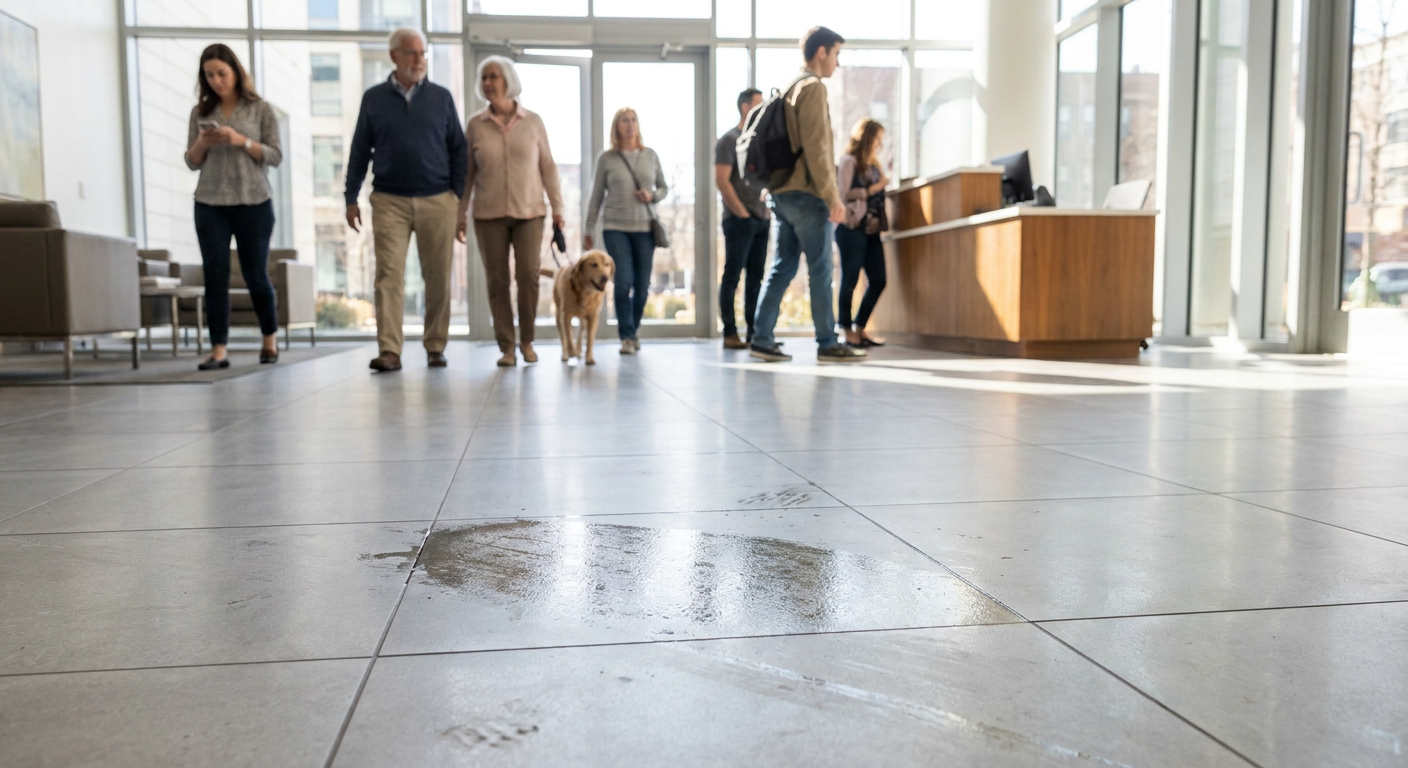
The Pervasive Challenge of Slip and Fall Incidents
Slip and fall incidents represent a significant concern for multifamily property owners and managers. These events can result in serious injuries to residents, visitors, or staff, leading to substantial medical costs and potential legal action.
Beyond the immediate human impact, such incidents can damage a property's reputation, increase insurance premiums, and consume valuable operational resources. Proactive measures are essential to foster a safer environment and protect assets.
Traditional approaches to identifying hazards often rely on manual inspections, which can be inconsistent, time-consuming, and reactive. Many risks are missed until an incident has already occurred, prompting a reactive investigation.
Understanding the Root Causes and Associated Liabilities
A wide array of factors can contribute to slip and fall risks within a multifamily setting. These include spills, uneven surfaces, poor lighting, icy patches near entrances, and obstructions in common areas. Each of these can become a liability point.
Property owners have a duty to maintain safe premises. Failure to address known or reasonably discoverable hazards can result in negligence claims, leading to costly litigation, settlements, and reputational damage.
Comprehensive documentation of maintenance efforts and incident responses is critical for defending against such claims. Without clear evidence, proving due diligence becomes an uphill battle in a legal setting.
AI Visuals: A New Frontier in Hazard Detection
Leveraging AI visual analysis presents a transformative opportunity for multifamily properties to enhance safety. This technology can continuously monitor common areas, entryways, stairwells, and amenities for potential slip and fall hazards.
Unlike human observation, AI systems do not tire and can detect subtle anomalies that might otherwise go unnoticed. This constant vigilance allows for more consistent and thorough identification of risks across large properties.
The power of AI lies in its ability to process vast amounts of visual data in real time, identifying conditions like liquid spills, misplaced objects, or accumulating ice before they lead to an incident. This shifts the safety paradigm from reactive to proactive.
Proactive Identification and Timely Remediation
When an AI system identifies a potential hazard, it can immediately generate an alert. This real-time notification allows property staff to address the issue promptly, often within minutes of its occurrence.
For instance, a spill in a lobby can be detected and cleaned before a resident encounters it. An object left on a stairwell can be removed to prevent tripping. This significantly reduces the window of exposure to risk.
Such rapid response capabilities not only improve resident safety but also demonstrate a property's commitment to maintaining high standards of care. This proactive stance can be invaluable in mitigating potential liability.
Generating Claim-Ready Evidence for Due Diligence
In the unfortunate event that an incident does occur, having robust, snapshot-based visual evidence is paramount. AI systems can document not only the hazard but also the time it was detected and the subsequent remediation efforts.
This irrefutable documentation serves as powerful evidence of due diligence, demonstrating that the property took reasonable steps to identify and mitigate risks. It provides an objective record, crucial for insurance claims and legal proceedings.
Detailed visual timelines can illustrate exactly when a hazard appeared, when it was addressed, and the conditions around an incident. This transparency helps to protect the property owner from unsubstantiated claims and reduces the potential for prolonged disputes.
Enhancing Resident Experience and Property Value
A safer property inherently contributes to a better resident experience. When residents feel secure and well-cared for, their satisfaction and retention rates typically improve. This can also attract new residents seeking a well-managed and safe living environment.
By systematically reducing slip and fall risks, property managers can cultivate a reputation for operational excellence and resident welfare. This positive perception translates into increased property value and market desirability.
Investing in advanced safety measures like AI visual analysis is not merely a cost but a strategic investment. It protects against financial losses and enhances the overall appeal and long-term viability of multifamily assets.
Conclusion
Mitigating slip and fall risks is a continuous and critical aspect of multifamily property management. The adoption of AI visual analysis provides a robust, proactive, and evidence-driven approach to enhance safety and reduce liability.
By leveraging existing camera infrastructure, platforms like Patrol Sense enable property managers to gain unparalleled visibility into potential hazards. This leads to faster remediation, stronger legal defenses, and ultimately, a safer community for everyone.