The Challenge of Property Insurance Claims
Property managers and business owners frequently grapple with the complexities of insurance claims. From natural disasters and vandalism to everyday operational incidents like a water leak, securing timely and fair compensation relies heavily on robust evidence.
Traditional methods of evidence collection often fall short. Manual documentation can be inconsistent, incomplete, or delayed, leading to disputes and prolonged claim resolution times. This directly impacts an organization's financial health and operational continuity.
Bridging the Evidence Gap with AI
AI-powered visual security platforms are revolutionizing how businesses approach evidence for property insurance. By automatically capturing critical moments as high-resolution snapshots, these systems eliminate the reliance on subjective human observation or the bulk of endless video footage.
This automated approach ensures that every significant event, from a minor structural issue to a major property damage incident, is documented with precise visual context. The result is a comprehensive and irrefutable record that strengthens any insurance claim.
Indisputable Snapshot-Based Documentation
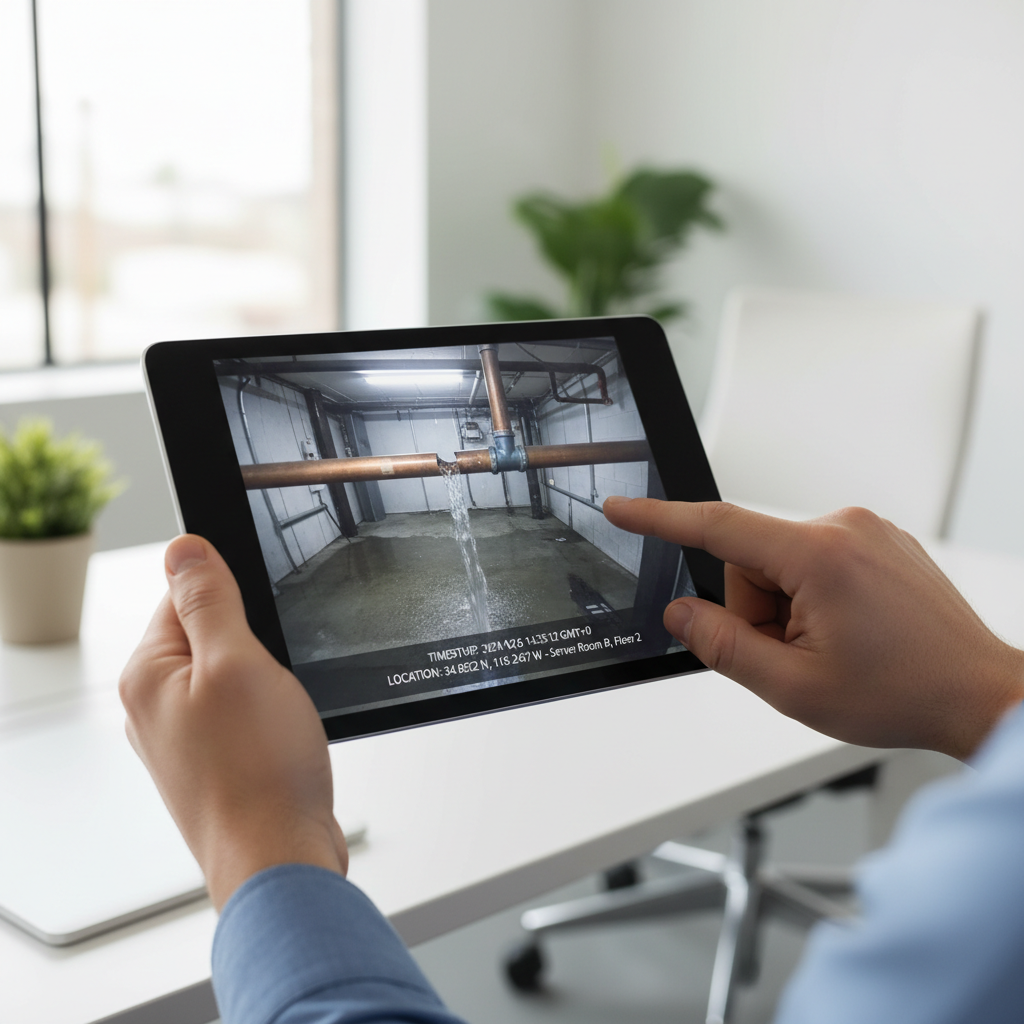
One of the primary benefits of AI visual evidence is its snapshot-based methodology. Unlike video, which can be cumbersome to review and prone to misinterpretation, snapshots offer a clear, concise, and focused piece of evidence. Each image captures the exact moment an incident occurs, providing an objective visual record.
These snapshots are often integrated with metadata, including timestamps, dates, and locations, further enhancing their credibility. This level of detail makes it significantly harder for claims to be contested due to insufficient information, streamlining the entire verification process.
Accelerating Claim Resolution and Payouts
The clarity and immutability of AI-generated visual evidence directly translate into quicker insurance claim resolutions. Insurers can swiftly assess the documented incident without extensive investigations or requests for additional material.
By providing a complete and verifiable evidence package upfront, businesses reduce the back-and-forth typical of complex claims. This accelerates payout times, minimizing financial strain and allowing for faster recovery and repair of damaged property.
Reducing Liability and Enhancing Transparency
Beyond direct property damage, AI visual evidence also plays a critical role in mitigating liability. For incidents such as slip-and-falls or property access breaches, exact visual records can demonstrate compliance, refute false claims, or present an accurate account of events.
This transparency builds trust with insurance providers and can lead to more favorable policy terms in the long run. By proactively documenting all significant occurrences, businesses establish a robust defense against potential legal challenges.
Conclusion
The landscape of property insurance claims is evolving, with technology offering new pathways to efficiency and accuracy. Leveraging AI visual evidence ensures that businesses are well-equipped to handle incidents, providing clear, concise, and indisputable documentation.
Platforms like Patrol Sense turn existing camera infrastructure into a powerful evidence-gathering tool, providing snapshot-based, claim-ready evidence without the need for proprietary hardware or the complexities of video clips. This approach fortifies insurance claims and safeguards businesses against unforeseen events.