The Evolving Landscape of Public Safety Needs
In today's dynamic world, public spaces face increasing demands for enhanced security. Traditional reactive security measures, while important, are often insufficient to prevent incidents before they escalate.
The imperative for proactive threat detection has never been greater. Organizations across various sectors, from urban municipalities to educational institutions, seek reliable methods to ensure the safety of their constituents and properties.
This shift calls for intelligent solutions that can identify potential risks early, allowing for timely intervention and mitigation, thereby minimizing harm and disruption.
Maximizing Existing Investments: The Power of AI
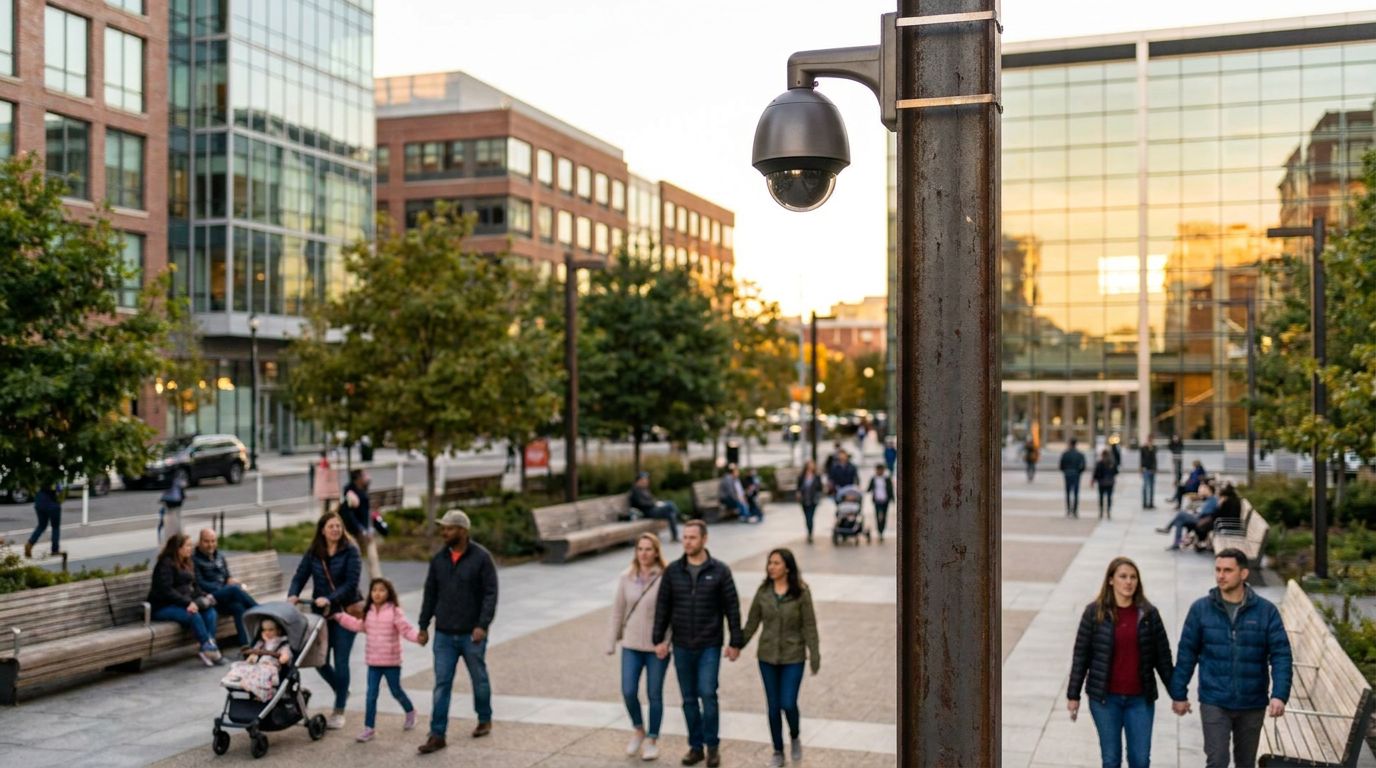
Many organizations have already invested heavily in extensive camera networks. However, these systems often operate primarily as forensic tools, providing evidence after an event has occurred.
Artificial intelligence offers a transformative opportunity to unlock the latent potential of these existing cameras. By integrating advanced AI visual analytics, these systems can evolve from passive recording devices into active, intelligent threat detection platforms.
This approach bypasses the need for costly and disruptive hardware overhauls, leveraging infrastructure that is already in place and operational.
Beyond Basic Monitoring: AI's Role in Early Threat Identification
AI goes beyond simple motion detection or perimeter breaches. Sophisticated algorithms are trained to recognize specific indicators associated with potential threats, such as the presence of a weapon.
This capability provides security personnel with a critical advantage: early warning. Instead of relying solely on human observation, which can be prone to fatigue and oversight, AI offers continuous, vigilant monitoring.
The goal is not just to record an event, but to detect anomalous or threatening objects as they appear, generating actionable alerts in near real-time.
Real-time Incident Detection and Snapshot Evidence
Upon detecting a potential threat, AI systems can immediately trigger alerts to security teams. This real-time notification is crucial for enabling rapid response protocols and potentially de-escalating dangerous situations.
Crucially, these systems generate snapshot-based evidence. Unlike continuous video footage, which can be resource-intensive to review and store, precise image snapshots capture the exact moment of detection.
This targeted, claim-ready evidence provides clear, timestamped visual documentation for immediate assessment, incident reporting, and potential legal or investigative processes.
Operational Benefits for Security Teams
Implementing AI for threat detection significantly enhances the efficiency and effectiveness of security operations. It augments human capabilities, allowing security personnel to focus on strategic responses rather than constant, manual monitoring.
By filtering out benign activity and flagging only potential threats, AI reduces alert fatigue and ensures that critical alerts receive immediate attention. This leads to more streamlined workflows and better allocation of security resources.
The ability to respond proactively, supported by clear visual evidence, can improve overall incident resolution times and contribute to a safer environment for everyone.
Conclusion
The integration of AI into existing camera infrastructure represents a pivotal advancement in public safety and security. It offers a scalable, cost-effective, and highly efficient method to transform reactive security into a proactive defense mechanism.
By leveraging current assets, organizations can significantly bolster their ability to detect and deter threats, safeguarding lives and property without the burden of extensive new hardware deployments.
Patrol Sense provides an AI security platform that seamlessly integrates with customers' existing cameras, delivering real-time incident detection with snapshot-based, claim-ready evidence, empowering organizations to achieve superior public safety outcomes.