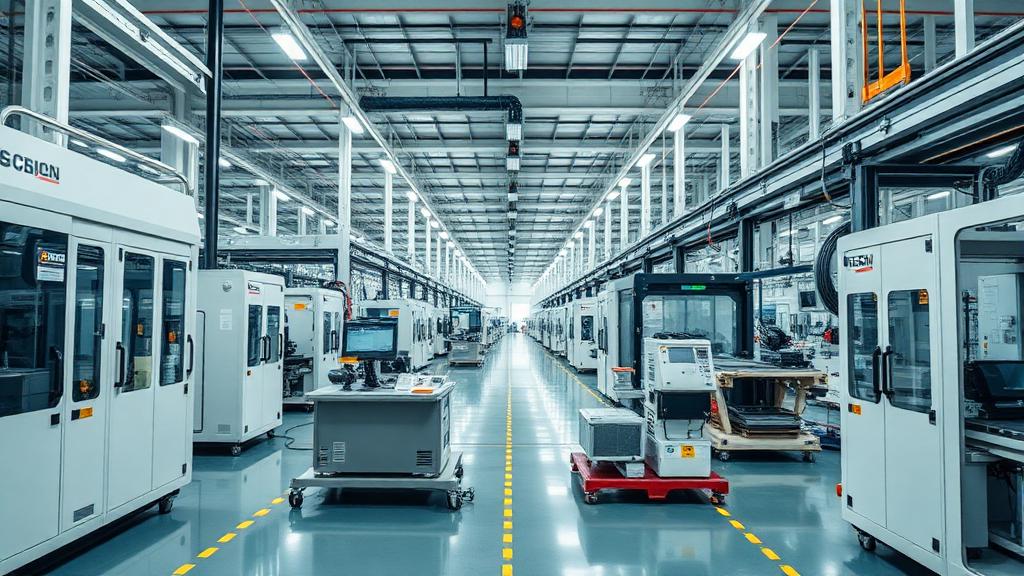
The Critical Infrastructure Challenge
Critical infrastructure facilities face unique security challenges. Power plants, water treatment facilities, transportation hubs, and communication networks operate continuously across massive geographic areas. A single facility might span hundreds of acres with miles of perimeter to secure. Traditional security approaches requiring human monitoring don't scale, you can't hire enough guards to watch every substation, pump house, and access point.
The consequences of security failures at critical infrastructure are catastrophic. A compromised water treatment facility threatens public health. Damage to power generation infrastructure blacks out entire regions. Transportation disruptions cascade through supply chains. These facilities require comprehensive security, but budget constraints and staffing shortages limit traditional approaches.
AI Monitoring at Scale
AI security enables comprehensive monitoring across massive facilities without proportional increases in security staff. A single AI platform can monitor hundreds of cameras across multiple sites, alerting security teams only when genuine threats are detected. Perimeter breaches, unauthorized vehicle access, suspicious behavior around sensitive equipment, all detected automatically while routine activities are ignored.
The technology excels at monitoring environments too large for human surveillance. Substations in remote areas. Pump houses accessible only by service roads. Communication towers on mountain peaks. AI systems provide continuous monitoring without requiring security personnel at every location. This enables security coverage that would be economically impossible through traditional staffing.
Threat Detection and Prevention
Critical infrastructure faces both physical and insider threats. AI security detects unauthorized access attempts, identifies suspicious vehicle patterns around facilities, and recognizes behaviors indicating potential sabotage or theft. The technology integrates with access control systems to verify that personnel entering sensitive areas have proper authorization and flag anomalies for investigation.
Pattern recognition capabilities identify insider threats that evade traditional security. Employees accessing areas outside their normal work patterns. Service vehicles appearing at unusual times. Contractors remaining on-site after work hours. These behavioral anomalies, invisible to individual guards, become obvious when AI analyzes patterns across time and locations.
Operational Intelligence Beyond Security
AI monitoring systems at critical infrastructure provide value beyond security. They detect equipment malfunctions, smoke from electrical panels, leaks from pipelines, unusual vibrations from machinery. They verify safety protocol compliance, PPE usage, proper lockout/tagout procedures, unauthorized entry to restricted zones. They support environmental monitoring, detecting spills, emissions, or other environmental concerns.
This operational intelligence transforms security systems from cost centers into strategic assets. The same cameras protecting against sabotage also detect maintenance issues before failures occur, verify safety compliance to prevent workplace injuries, and document environmental protection efforts. Infrastructure operators gain comprehensive situational awareness that improves security, safety, and operations simultaneously.
Related articles
Industry
How AI Security Helps Small Businesses Operate Like Enterprises
3 min read
AI monitoring gives small businesses access to the same level of protection and evidence quality that large enterprises rely on.
Industry
Multi-Tenant Properties: Security and Operations for Complex Buildings
4 min read
Office buildings with multiple tenants face unique security challenges. Different companies require different access controls. Shared spaces need monitoring. Lease violations must be documented.
Industry
Data Center Security: Physical Protection for Digital Infrastructure
5 min read
Data centers house critical digital infrastructure worth billions in assets and liability exposure. Physical security requirements are extreme, but traditional approaches create operational friction.