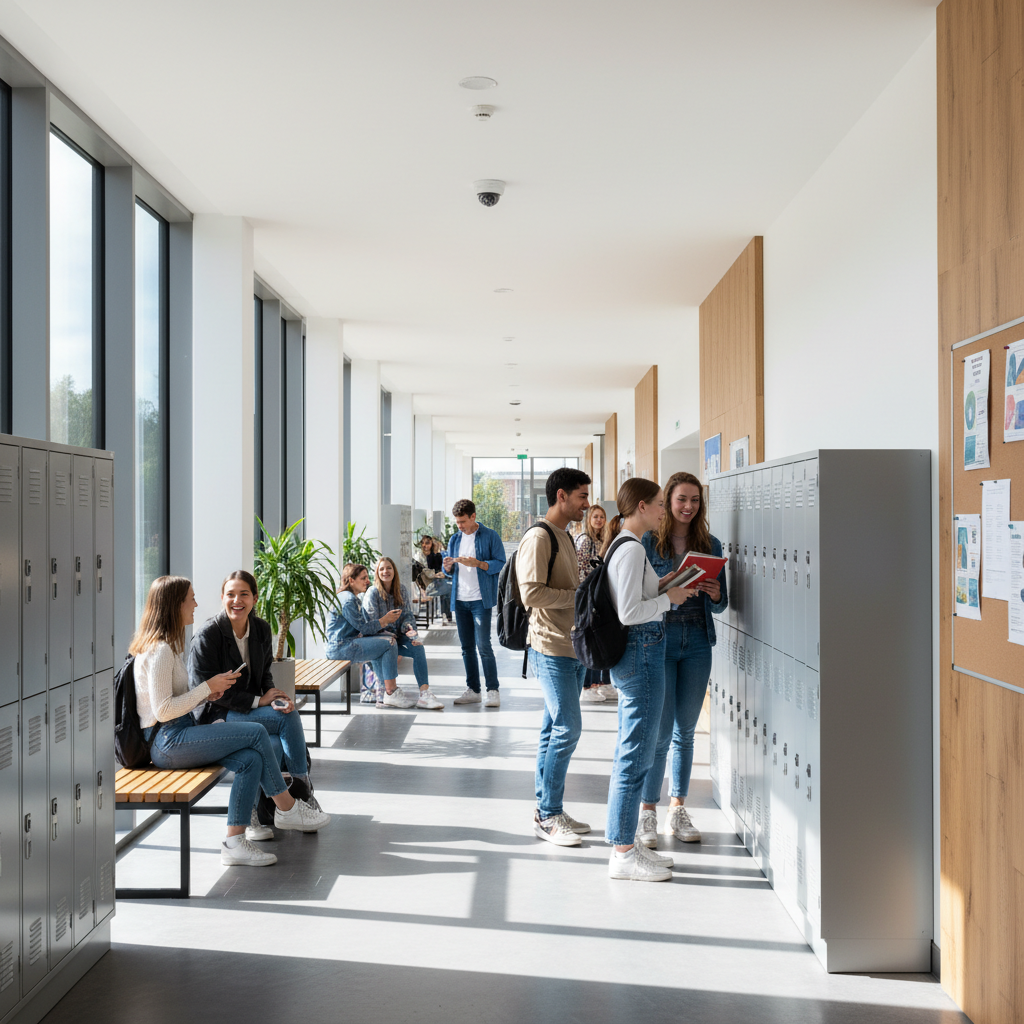
Beyond the School Perimeter: A Deeper Look at Safety
Traditional school security often prioritizes robust perimeter defenses, access control at entry points, and visible patrols. While these measures are crucial, the reality of school safety today demands a more comprehensive approach that extends within the building's walls.
Internal incidents, ranging from unauthorized access inside hallways to altercations in common areas, pose significant challenges. Detecting and responding to these events swiftly is paramount for student and staff well-being.
The Challenge of Monitoring Inner Spaces Effectively
Monitoring vast internal school spaces, including classrooms, cafeterias, libraries, and hallways, presents unique logistical hurdles. Human surveillance is resource-intensive and prone to fatigue, making consistent, real-time detection difficult.
Many schools possess an existing infrastructure of surveillance cameras. However, these systems often operate as passive recording devices, providing footage for post-incident review rather than proactive detection.
Leveraging Existing Infrastructure for Enhanced Internal Security
The significant investment already made in camera systems can be maximized without the need for expensive hardware upgrades. Artificial intelligence (AI) offers a transformative solution by integrating with and augmenting current setups.
By applying AI analytics to live camera feeds, schools can transition from reactive incident review to proactive, real-time detection. This approach leverages familiar technology in an innovative way to address emerging security needs.
Real-time Incident Detection Within School Grounds
AI-powered incident detection can identify a range of critical events occurring within school buildings. This includes detecting the presence of unauthorized individuals in restricted areas, identifying aggregations of people that may indicate an altercation, or recognizing specific objects that pose a threat.
The system processes visual data instantaneously, far exceeding human capabilities for continuous observation across multiple camera feeds. This allows for immediate alerts when anomalies or potential threats are identified.
Snapshot-Based Evidence for Swift and Clear Response
When an incident is detected, the AI generates claim-ready visual evidence in the form of precise snapshots. These still images provide clear, unambiguous proof of the event, including timestamps and locations.
This snapshot-based evidence is invaluable for validating alerts, informing immediate response protocols, and providing critical information for investigations. It removes ambiguity and supports efficient decision-making during unfolding situations.
Improving Incident Workflow and Documentation
Automating incident detection and evidence capture streamlines the entire security workflow. Security personnel can focus on responding to verified threats rather than continually monitoring screens for potential issues.
Comprehensive visual logs are automatically generated, creating an accurate and unalterable record of events. This documentation supports internal reporting, aids in post-incident analysis, and can be critical for any potential legal or insurance proceedings.
Conclusion
Elevating school safety requires a layered approach that effectively monitors both external perimeters and internal spaces. By transforming existing camera infrastructure into intelligent detection systems, schools can achieve a more robust and proactive security posture.
This strategic integration of technology enhances the ability to identify and respond to incidents swiftly and effectively, creating a safer learning environment for everyone. Patrol Sense empowers institutions to achieve this enhanced level of security by turning their existing cameras into powerful real-time incident detection and evidence platforms.