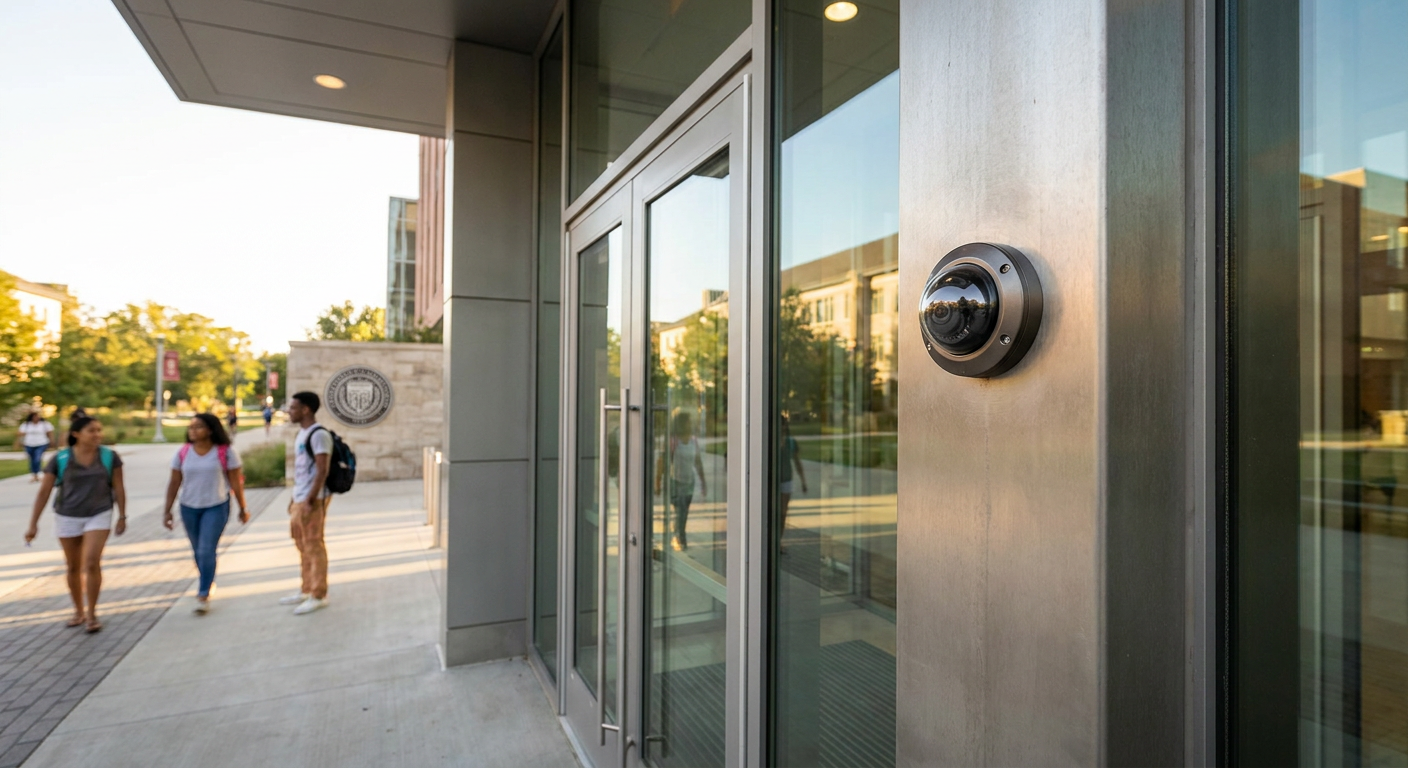
The Evolving Landscape of Campus Security
Educational institutions, from K-12 schools to large university campuses, are increasingly prioritizing advanced security measures. The traditional approach often involves significant capital expenditure on new hardware, which can be a barrier to rapid deployment.
However, the fundamental need remains: to create a safe learning and working environment for students, faculty, and staff. This requires moving beyond reactive responses to proactive threat detection and incident prevention.
Modern security strategies must account for various potential incidents, including unauthorized access, disturbances, and more severe threats. Leveraging existing infrastructure offers a path to enhanced security without complete overhauls.
Transforming Existing Cameras into Smart Sentinels
A common misconception is that advanced security demands entirely new camera systems. The reality is that AI-powered analytics can revolutionize the capabilities of your current surveillance infrastructure.
By applying sophisticated algorithms to the video feeds from your existing cameras, AI can detect anomalous behaviors, objects, and situations in real time. This means your current hardware becomes significantly more intelligent and responsive.
This approach bypasses the need for costly and disruptive rip-and-replace projects, allowing campuses to rapidly deploy enhanced security features with minimal operational impact.
Proactive Detection Beyond Perimeter Fences
True campus security extends beyond the traditional gates and building entrances. It encompasses classrooms, cafeterias, hallways, parking lots, and open recreational spaces. Proactive detection is crucial for mitigating risks across all these areas.
AI can be trained to identify specific indicators of potential threats, such as the presence of certain objects or behaviors that deviate from established norms. This allows security personnel to be alerted to developing situations before they escalate.
This proactive capability empowers security teams to intervene swiftly, reducing response times and potentially preventing incidents altogether. It shifts the paradigm from post-incident review to real-time, actionable intelligence.
The Power of Snapshot-Based Evidence for Swift Response
In critical security situations, every second counts. AI systems that provide snapshot-based evidence are particularly effective, offering immediate visual context without the bandwidth demands or privacy concerns associated with continuous video streaming.
When an anomaly or potential threat is detected, the system captures precise image snapshots, which can be instantly relayed to security teams. These snapshots offer clear, claim-ready evidence of the incident.
This rapid, targeted information allows security personnel to quickly assess the situation, verify the threat, and dispatch appropriate resources with high confidence. It streamlines the incident response workflow and minimizes ambiguity.
Enhancing Operational Efficiency and Resource Allocation
Integrating AI into existing campus security infrastructure not only improves safety but also boosts operational efficiency. Automated monitoring reduces the reliance on manual surveillance, allowing security staff to focus on higher-value tasks.
By filtering out irrelevant visual noise and alerting only to genuine incidents, AI systems prevent alert fatigue and ensure that human resources are deployed effectively. This optimized resource allocation leads to more responsive and cost-effective security operations.
The ability to generate incident logs and visual timelines automatically also simplifies post-incident analysis and reporting. This data-driven approach supports continuous improvement in campus security protocols.
Conclusion
The imperative for robust campus security is undeniable, and AI offers a transformative solution by enhancing existing camera infrastructure. By providing proactive, real-time incident detection and actionable, snapshot-based evidence, campuses can achieve higher levels of safety and operational efficiency without extensive hardware investments.
Patrol Sense specializes in empowering organizations to leverage their current camera systems for advanced AI-driven security. Our platform delivers real-time incident detection and generates snapshot-only, claim-ready evidence, enabling swift and effective responses to evolving campus security challenges.