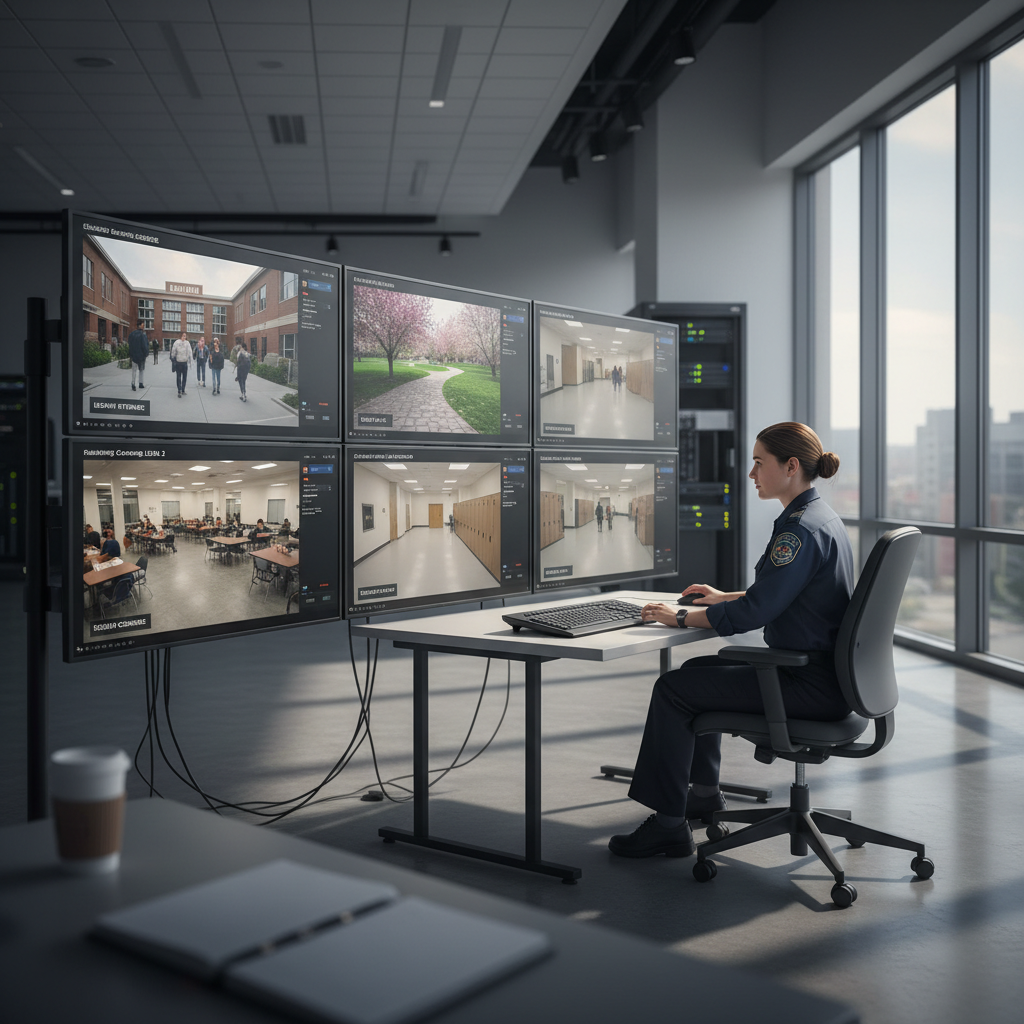
The Evolving Landscape of Campus Security
Educational campuses, from K-12 schools to large universities, face persistent challenges in ensuring the safety of students, faculty, and staff. Traditional security measures often rely on human vigilance and reactive responses, which can have limitations in time-sensitive situations.
The current environment necessitates proactive and efficient solutions that can identify potential threats before they escalate. Modern security strategies must incorporate advanced technologies to supplement human efforts and reduce response times significantly.
Integrating new security technologies into existing infrastructure presents a common hurdle for many institutions. Budget constraints and disruption to operations often deter the adoption of comprehensive security upgrades.
Leveraging Existing Camera Infrastructure for Enhanced Protection
Many campuses already possess extensive networks of surveillance cameras installed across their facilities. These cameras represent a significant investment and a valuable, often underutilized, asset for security enhancement.
Instead of replacing or adding new hardware, institutions can upgrade their existing cameras with advanced AI capabilities. This approach is highly cost-effective and minimizes the logistical complexities associated with large-scale hardware deployments.
By integrating AI-powered analytics, these cameras can transition from passive recording devices to active threat detection systems. This transformation is pivotal for modernizing campus security protocols without overhauling physical infrastructure.
AI-Powered Weapon Detection: A Proactive Stance
AI-powered weapon detection systems analyze camera feeds in real-time to identify potential weapons. Unlike traditional methods, AI can process vast amounts of visual data continuously, significantly increasing the likelihood of early threat detection.
The system focuses on identifying specific objects and patterns indicative of a weapon. This capability allows security personnel to be alerted to potential threats as they emerge, rather than after an incident has already begun.
This proactive approach shifts security from incident response to incident prevention. Early detection provides critical time for security teams to enact emergency protocols, alert authorities, and secure vulnerable areas.
Operational Benefits for Campus Security Teams
Implementing AI weapon detection streamlines security operations by reducing the reliance on constant manual monitoring of camera feeds. Security personnel can dedicate their attention to verifying alerts and coordinating responses.
The system generates snapshot-based evidence upon detection, providing clear, claim-ready visual documentation of potential incidents. This precise data is invaluable for rapid assessment and for informing law enforcement or emergency services.
This enhances the efficiency of security teams and provides an objective record of events. Such documentation is critical for post-incident analysis, stakeholder communication, and legal purposes, ensuring transparency and accountability.
Scalability and Integration into Existing Security Workflows
AI weapon detection solutions designed for existing cameras often offer seamless integration with current security management systems. This avoids the need for extensive retraining or retooling of security protocols.
The scalability of these AI platforms allows institutions to deploy the technology across a few critical areas or broad campus-wide segments as needed. This flexibility supports phased implementation strategies aligned with budgetary cycles.
Such solutions are built to be non-disruptive, allowing campuses to enhance their security posture without significant operational overhead. The focus remains on improving safety outcomes through smart technology utilization.
Conclusion
The safety of educational campuses is paramount, and advanced technology plays a crucial role in achieving this objective. AI-powered weapon detection, seamlessly integrated with existing camera infrastructure, offers a pragmatic and powerful solution.
By transforming passive surveillance into proactive threat detection, campuses can significantly enhance their ability to prevent and respond to security incidents. This approach provides a robust layer of protection, strengthening the overall security posture without necessitating entirely new hardware.
Patrol Sense specializes in leveraging AI to turn existing cameras into intelligent incident detection systems, providing snapshot-based, claim-ready evidence for critical situations like weapon detection, thereby enhancing campus safety and operational resilience.