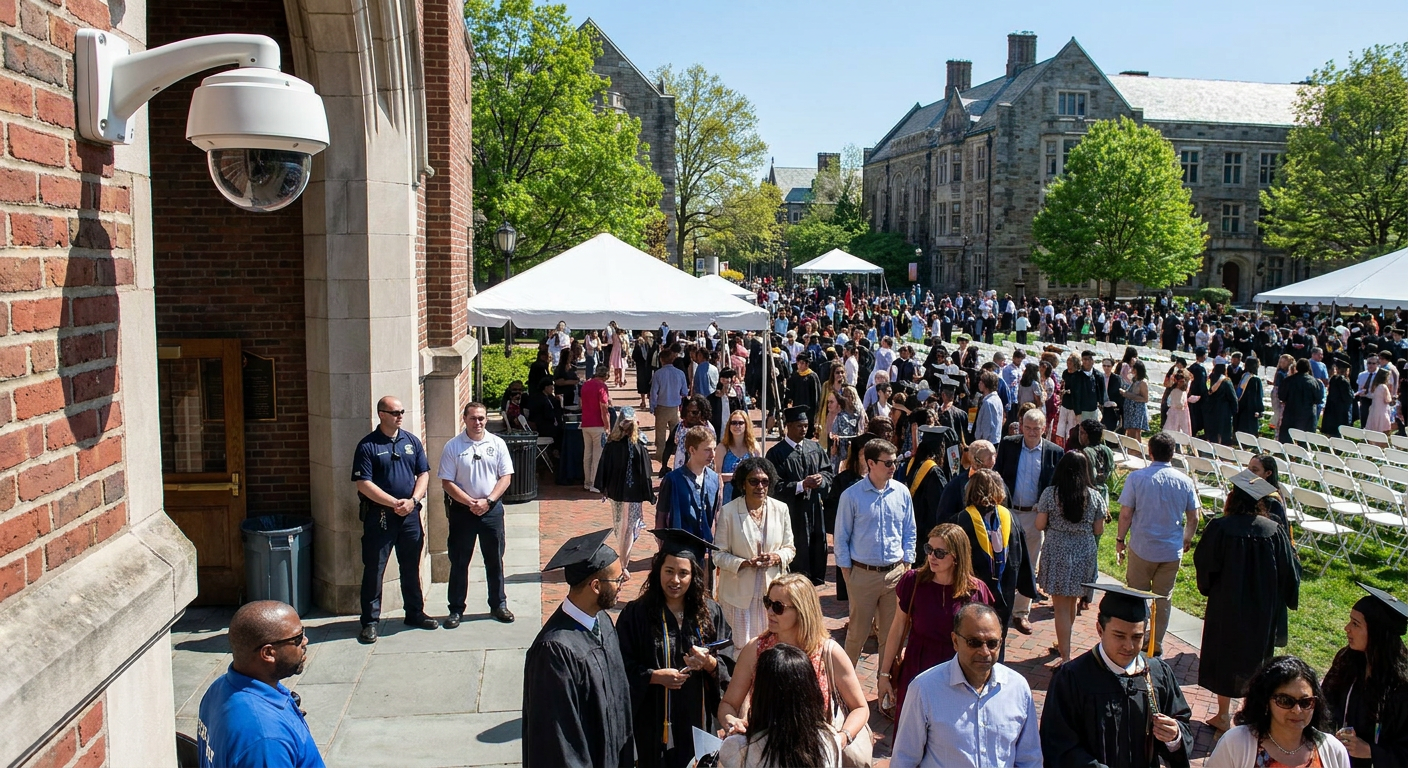
The Unique Challenges of Campus Event Security
Campus events, whether a major athletic competition, a large-scale concert, or a graduation ceremony, attract significant crowds and create dynamic environments. These events introduce a complex array of security challenges that differ from day-to-day campus operations. Managing crowd flow, identifying potential disturbances, and responding to incidents quickly are paramount.
Traditional security approaches often rely heavily on increased personnel, which can be costly and still miss subtle indicators of trouble in a vast, moving crowd. The sheer volume of people and the varying nature of events necessitate a more scalable and intelligent security solution. Maintaining a positive, welcoming atmosphere while ensuring robust safety measures is a delicate balance.
Beyond Traditional Guarding: The Role of AI
While human security guards are indispensable, their effectiveness in large, complex event settings can be significantly augmented by technology. Artificial intelligence (AI) offers a transformative approach by providing continuous, unbiased monitoring across expansive areas. This allows security teams to extend their reach and focus their attention where it's most needed.
AI visual monitoring can process vast amounts of data from existing camera infrastructure in real time. It identifies anomalies and potential threats that might be missed by human observers, especially during peak activity. This capability shifts security from a reactive model to a proactive one, enabling early intervention and mitigation.
Proactive Incident Detection for Enhanced Safety
AI's strength lies in its ability to detect patterns and deviations from normal behavior. During campus events, this translates into identifying potential safety concerns before they escalate. Examples include detecting unauthorized access attempts, crowd density issues that could lead to bottlenecks, or individuals exhibiting suspicious behaviors.
By flagging these incidents instantly, security teams receive immediate alerts, complete with visual evidence. This allows for rapid assessment and deployment of resources to the precise location of the issue. The goal is to prevent minor incidents from becoming major disruptions or safety hazards for attendees.
Leveraging Existing Infrastructure for Cost-Effective Solutions
Many campuses already possess extensive networks of surveillance cameras, often viewed as a sunk cost for basic monitoring. AI-powered platforms can unlock the full potential of this existing infrastructure, transforming passive cameras into active, intelligent security sensors. This eliminates the need for expensive hardware upgrades or new installations for event-specific monitoring.
This cost-effectiveness is a significant advantage for budget-conscious educational institutions. Campuses can enhance their security posture for events without undertaking major capital expenditures, maximizing the utility and return on investment of their current assets. The integration process is typically straightforward, minimizing operational disruption.
Snapshot-Based Evidence for Swift Resolution
In the event of an incident, clear and verifiable evidence is crucial for investigations, liability claims, and future security planning. AI visual monitoring platforms provide snapshot-based evidence, capturing key moments of an event. These high-quality images offer immediate, objective documentation.
This snapshot approach is particularly valuable for campus events, where rapid movement and large crowds can make obtaining clear evidence challenging. The ability to retrieve precise, time-stamped images facilitates quick incident reporting and supports decision-making for campus administrators and law enforcement, ensuring accountability and improving response protocols.
Conclusion
Securing campus events in today's environment demands a sophisticated, yet practical approach. AI-powered visual monitoring offers a compelling solution, bridging the gap between traditional security methods and the dynamic needs of large gatherings. By leveraging existing camera infrastructure, it provides real-time detection, proactive insights, and reliable snapshot-based evidence.
Platforms like Patrol Sense empower campuses to elevate their event security, ensuring a safer experience for students, faculty, and visitors. This intelligent integration of technology not only enhances safety but also optimizes security operations, allowing campuses to focus on their primary mission while confidently hosting memorable events.